
If pet smells keep sneaking back no matter how much you clean, you are not alone. The good news is there are smart, science-backed ways to tackle odors at the source.
With a few expert tricks and the right routine, your home can smell fresh without masking scents. Let us dive into practical steps you can start using today.
Deep Clean Carpets With Enzymes
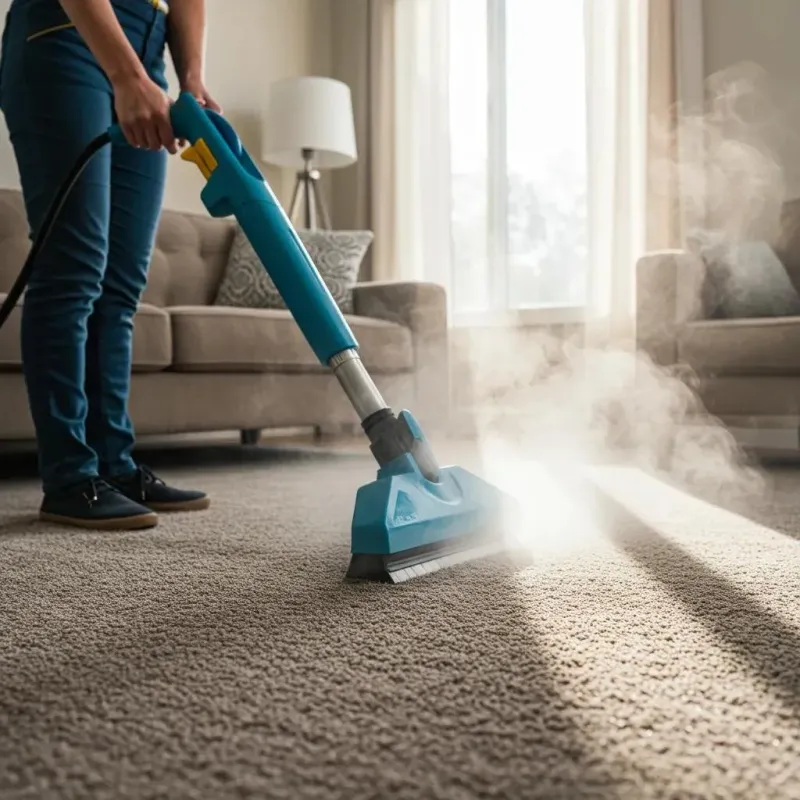
Carpets trap pet dander, oils, and proteins that cause stubborn smells. Use an enzyme-based carpet cleaner that targets organic matter, breaking down odor molecules instead of masking them.
Pre-treat obvious spots, then slowly extract with a carpet machine, allowing the solution time to dwell.
Work in sections and ventilate the room well to speed drying and prevent mildew. Follow with a clear-water rinse pass to remove residue that can attract more dirt.
Repeat for heavy traffic areas and under furniture where pets love to nap.
Finish by grooming the carpet fibers so they dry upright and evenly. Vacuum once dry to lift remaining particles.
Schedule quarterly deep cleans, with monthly touch-ups for multi-pet homes.
Neutralize Accidents With Enzymatic Spot Treatment
Fresh accidents are easiest to fix, so act fast. Blot with plain paper towels until no more moisture transfers, pressing firmly.
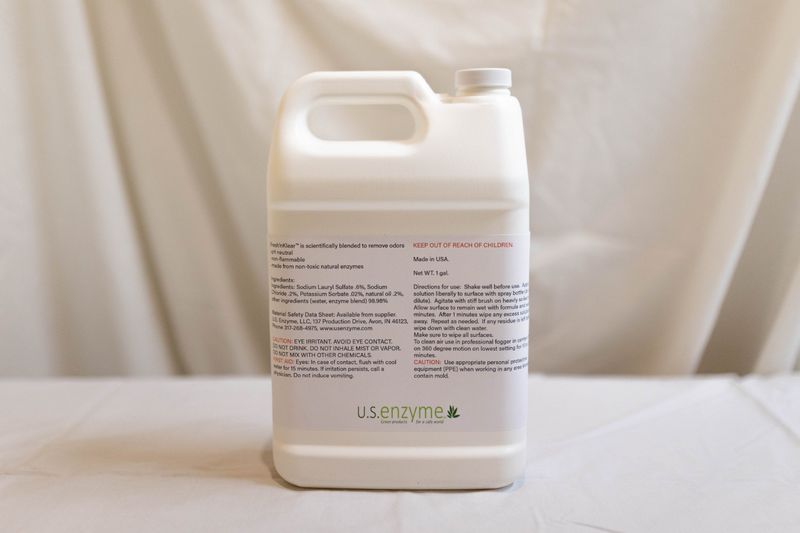
Saturate the area with an enzymatic cleaner designed for urine, ensuring it reaches the pad beneath the carpet.
Let it dwell as directed, usually 10 to 15 minutes or longer for older stains. Cover with a damp cloth to keep enzymes active, then blot again.
Avoid steam cleaning until enzymes have finished working, or odors may set.
If padding is soaked, inject cleaner with a syringe to reach deeper layers. Allow thorough air-drying, then reassess.
A light second application often finishes the job for persistent protein-based smells.
Wash Pet Bedding and Soft Furnishings Regularly
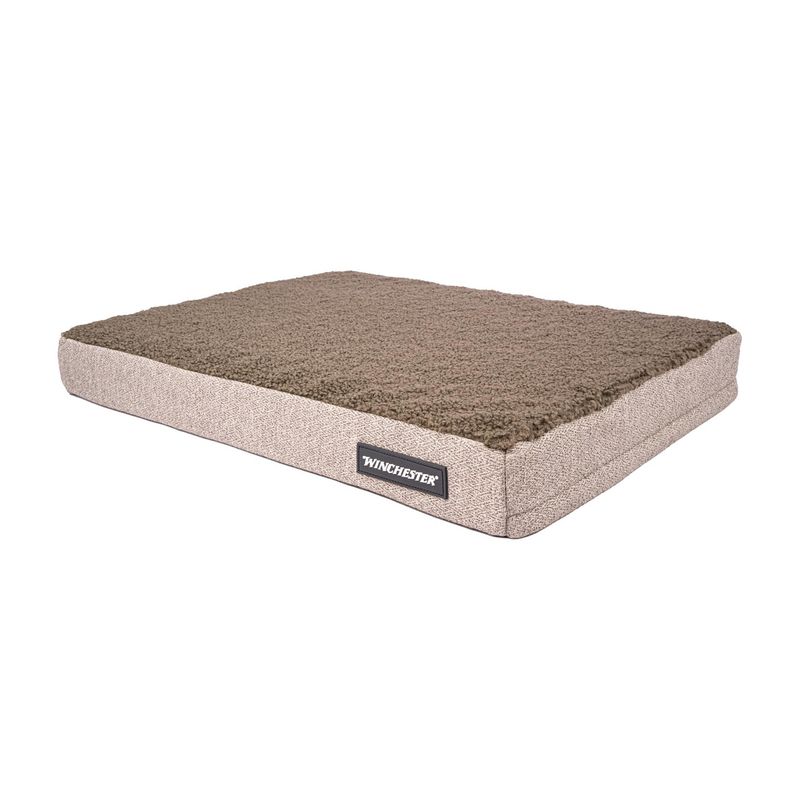
Pet bedding is ground zero for lingering odors. Wash removable covers weekly using hot water if fabric allows, plus an odor-removing detergent.
Add a cup of white vinegar to the rinse cycle to neutralize smells without heavy fragrance.
Dry thoroughly on high heat or in sunlight, which helps break down odor compounds and kills bacteria. For non-removable foam, sprinkle baking soda, let sit, then vacuum.
Spot clean with mild soap and allow complete drying before use.
Do not forget throw blankets, couch covers, and crate liners. Rotate sets so one is always clean.
A consistent schedule prevents buildup and keeps the whole room fresher longer.
Vacuum Smart With HEPA and Anti-Odor Tools
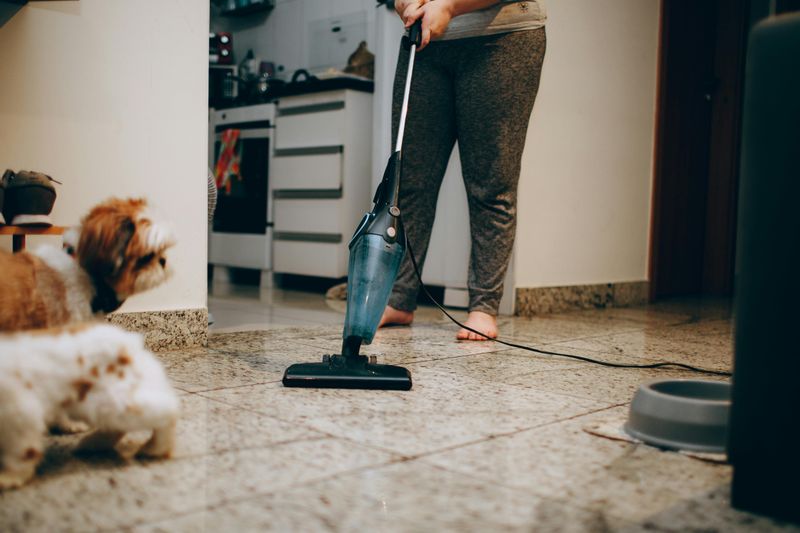
Regular vacuuming stops pet odors at the source by removing dander and hair before they settle. Choose a vacuum with a sealed HEPA system to trap fine particles.
Use motorized brush heads on carpets and a crevice tool along baseboards where fur accumulates.
Empty canisters outdoors and wipe with diluted vinegar to prevent musty smells. Replace or wash filters on schedule for consistent suction and odor control.
For upholstery, a mini turbo brush pulls hair from fibers that hold scent.
Consider sprinkling baking soda before vacuuming, letting it sit 15 minutes to absorb odors. Vacuum daily in high-traffic zones and twice weekly elsewhere.
Consistency keeps the air fresher and reduces the need for heavy cleaning later.
Deodorize and Disinfect Hard Floors Safely
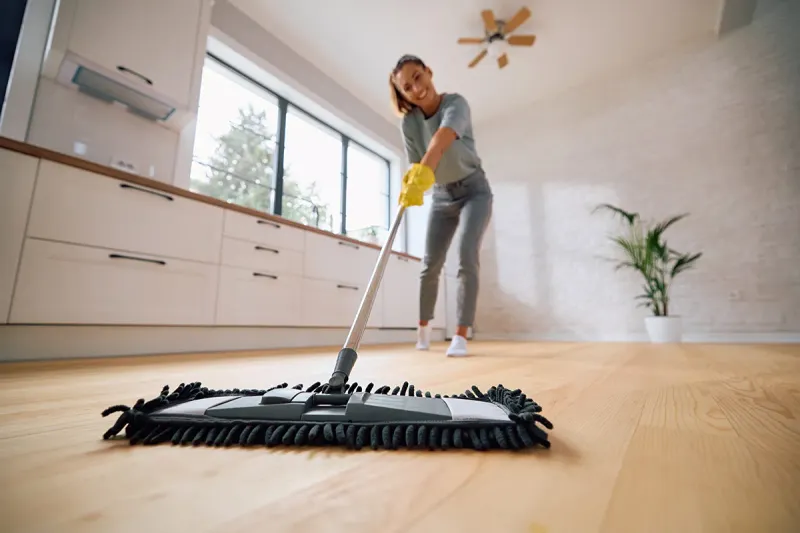
Hard floors carry invisible odor residues from paws, drool, and food spills. Mop with a pet-safe, non-ammonia cleaner that neutralizes smells without harsh fragrance.
Microfiber mops lift fine grime better than string types and leave less residue.
Avoid bleach-ammonia combos and citrus oils that can irritate pets. For sealed wood, use a lightly damp mop and dry promptly to protect the finish.
In kitchens, focus around feeding stations where drips and crumbs ferment.
For grout, scrub with hydrogen peroxide and baking soda paste, then rinse well. Finish with good airflow to dry surfaces completely.
Clean high-traffic areas several times weekly for proactive odor prevention.
Refresh Upholstery, Curtains, and Cushions
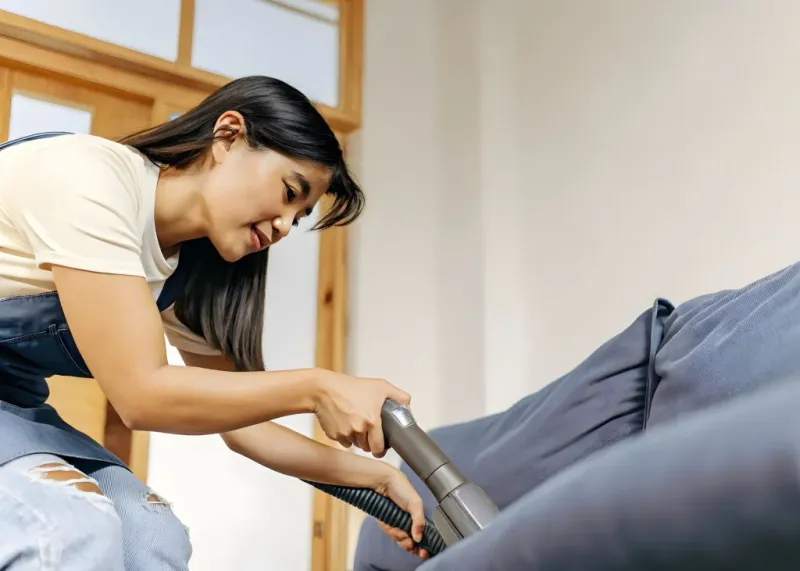
Soft furnishings quietly collect pet smells. Start by vacuuming sofas, chairs, and cushions with an upholstery tool to remove hair and dander.
Lightly mist a fabric-safe deodorizer that neutralizes odors instead of masking with heavy perfume.
Steam cleaning can sanitize and release trapped scents, but test fabric first. For delicate curtains, launder or steam on a gentle setting and air-dry outdoors when possible.
Rotate cushions to distribute wear and reduce concentrated odor zones.
Baking soda is a budget helper: sprinkle, wait 30 minutes, then vacuum thoroughly. Keep pets off freshly cleaned fabrics until fully dry.
Repeat monthly to stay ahead of buildup, especially in rooms where pets lounge daily.
Improve Ventilation and Use Activated Charcoal
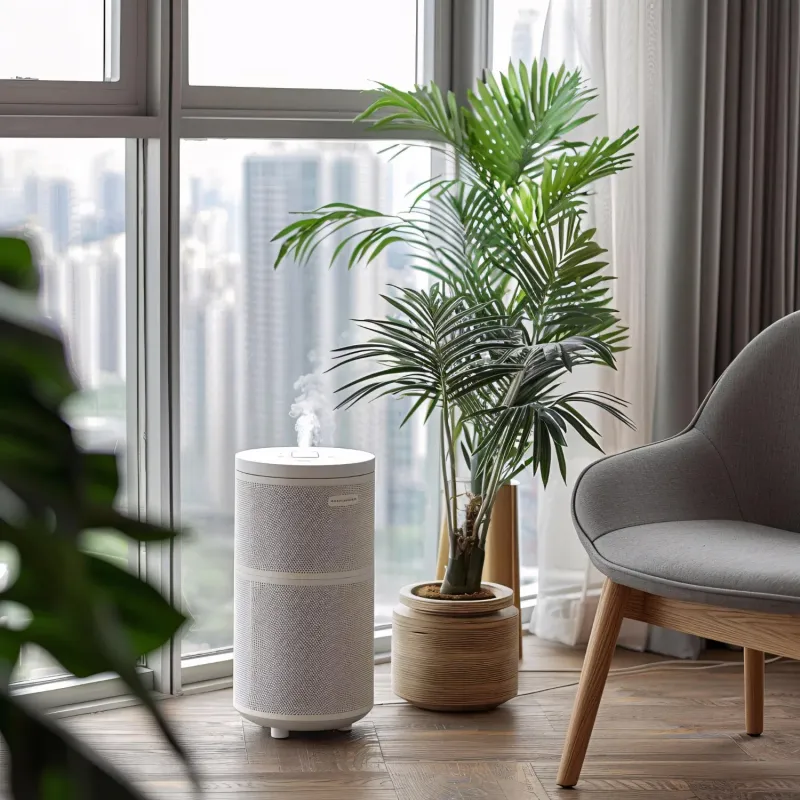
Odors linger when air is stagnant. Open windows daily, even for 10 minutes, to exchange indoor air.
Pair ventilation with activated charcoal bags that absorb smells passively without scent, ideal near litter boxes or pet beds.
Place multiple small bags instead of one large one for wider coverage. Recharge charcoal in sunlight monthly to restore effectiveness.
Combine with a quiet fan to direct fresh air through high-use pet zones.
Check HVAC filters and upgrade to higher MERV ratings your system can handle. Cleaner airflow reduces dander recirculation and keeps rooms fresher.
Small changes add up, creating a home that smells clean rather than covered by fragrance.
Tackle Litter Box Smell at the Source
Litter odors spike when moisture and ammonia are not controlled. Scoop clumps twice daily and replace litter weekly.
Wash the box with mild soap, then a diluted vinegar rinse to neutralize trapped smells.
Use a high-quality clumping litter and add a thin baking soda layer on the bottom. Consider a litter mat to catch granules that hold odor outside the box.
Place the setup in a ventilated area rather than a tight closet.
For multi-cat homes, provide one box per cat plus one extra. Replace boxes annually because plastic retains scent.
These steps dramatically reduce ammonia build-up and keep nearby rooms smelling fresh.
Groom Pets for Odor Prevention
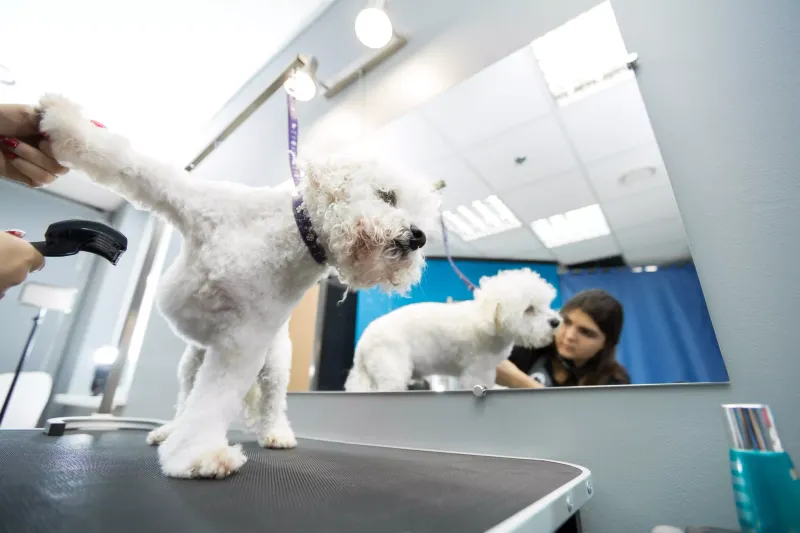
Odor control starts with the pet. Brush regularly to remove loose hair and distribute skin oils evenly, which prevents musty buildup around the house.
Schedule baths as recommended by your vet, using a gentle, species-appropriate shampoo.
Clean ears, trim nails, and brush teeth since oral bacteria contribute to household smells. Wipe paws after walks to limit outdoor grime and allergens that cling to fabrics.
A balanced diet supports healthy skin and coat, reducing odor at the source.
Between baths, use grooming wipes on high-odor zones like paws and bellies. Keep grooming tools clean and dry to avoid mildew smells.
A consistent routine makes the whole home feel fresher, effortlessly.
Use an Air Purifier With True HEPA and Carbon
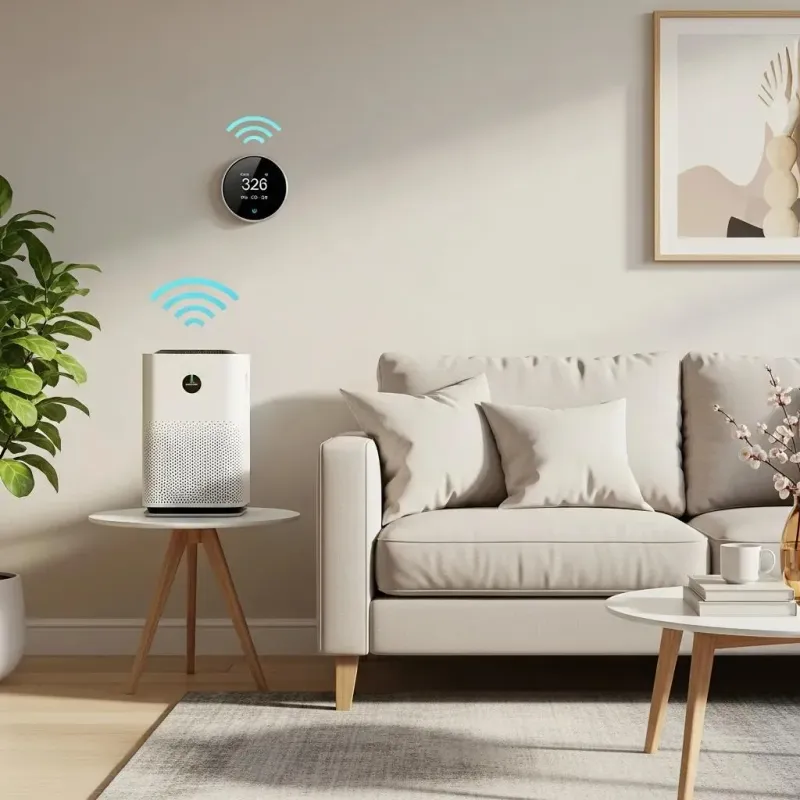
Air purifiers can capture dander and neutralize odors around the clock. Choose a model with a true HEPA filter for particles and a substantial activated carbon stage for smells.
Size it correctly to your room for effective air changes per hour.
Place it near odor sources but not blocked by furniture. Run continuously on low for quiet maintenance, bumping to high after cleaning or during shedding season.
Replace filters on schedule, marking dates on a calendar so you do not forget.
Combine with regular cleaning for best results, not as a standalone fix. You will notice fresher air and fewer lingering pet notes.
It is a calm, low-effort upgrade for odor-prone spaces.