
Your dog is a brutally honest character witness. While your friends may charm the room, your pup’s ears, tail, and paws are quietly delivering the real review. Want to know who’s a keeper and who raises red flags? Decode these unmistakable dog reactions and you’ll never miss the feelings your four-legged judge is broadcasting about your social circle.
Rocket Tail Wags
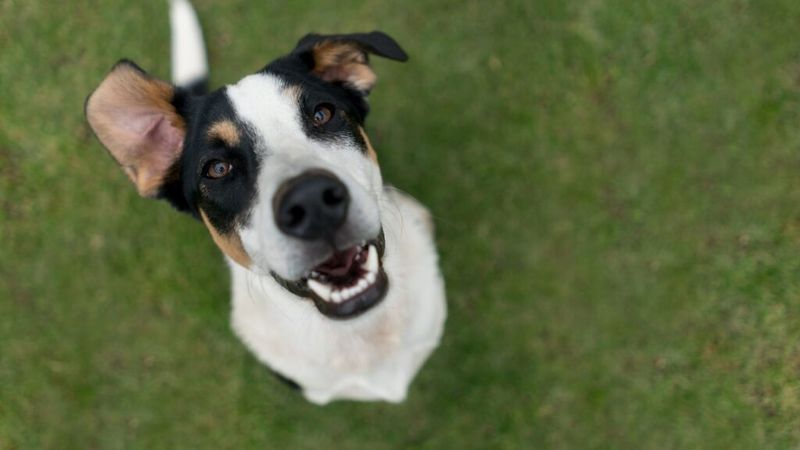
When your dog’s tail turns into a helicopter, you’re witnessing pure social approval. This high, fast wag signals excitement and trust, especially if it’s accompanied by soft eyes and a relaxed mouth. Watch for the full-body sway—hips included—which often means your friend is now part of the inner circle. If the wag is loose and sweeping, you’re golden. But keep an eye on context; a stiff, high wag can be arousal rather than friendliness. Look for relaxed ears and a wiggle butt to confirm the vibe. Your dog’s endorsement doesn’t get clearer than this.
Slow-Blink Soft Eyes
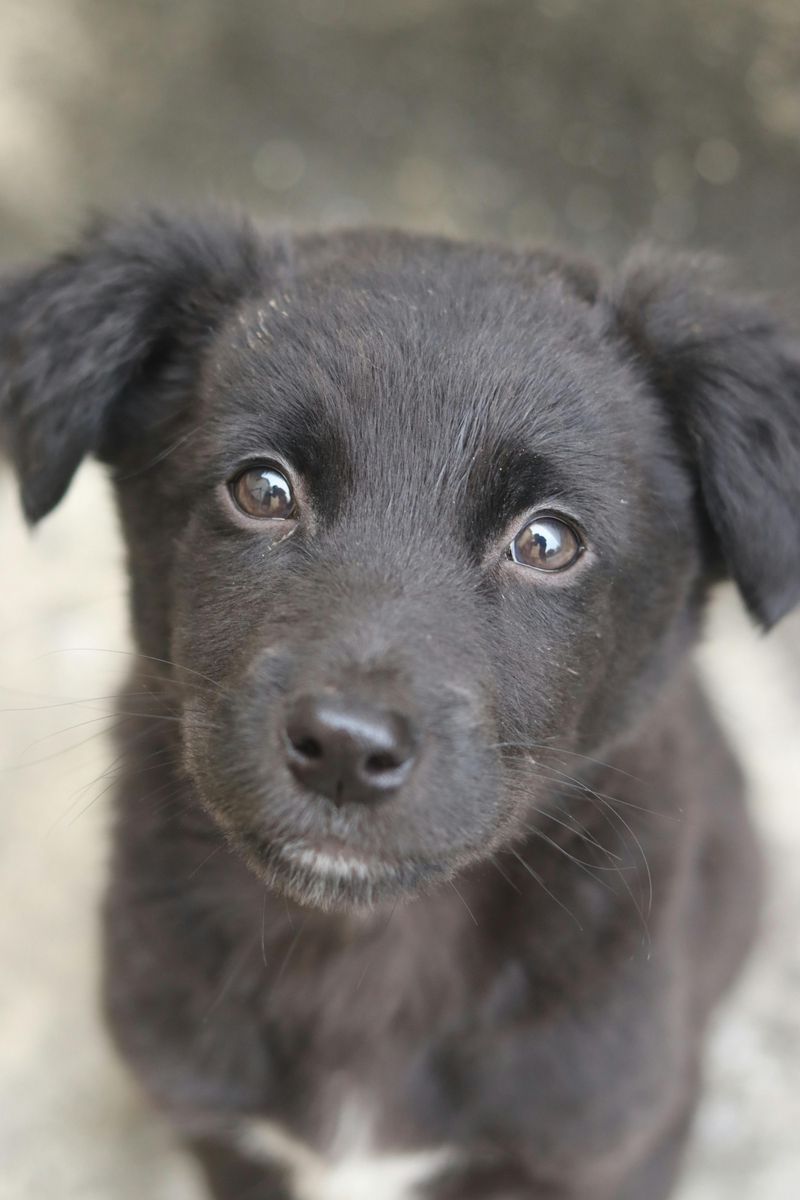
Soft, almond-shaped eyes with slow blinks are a dog’s version of a nod and a smile. If your pup glances at your friend, blinks slowly, and relaxes their jaw, they’re saying, “I feel safe.” The absence of hard staring or whale eye is key. Combine it with a gentle lean or a sigh and you’ve got acceptance. Even better: a soft gaze after initial sniffing suggests positive reassessment. If your friend respects space and avoids looming, the bond strengthens fast. Soft eyes are trust made visible—and your friend just passed the vibe check beautifully.
Polite Sniff-and-Withdraw
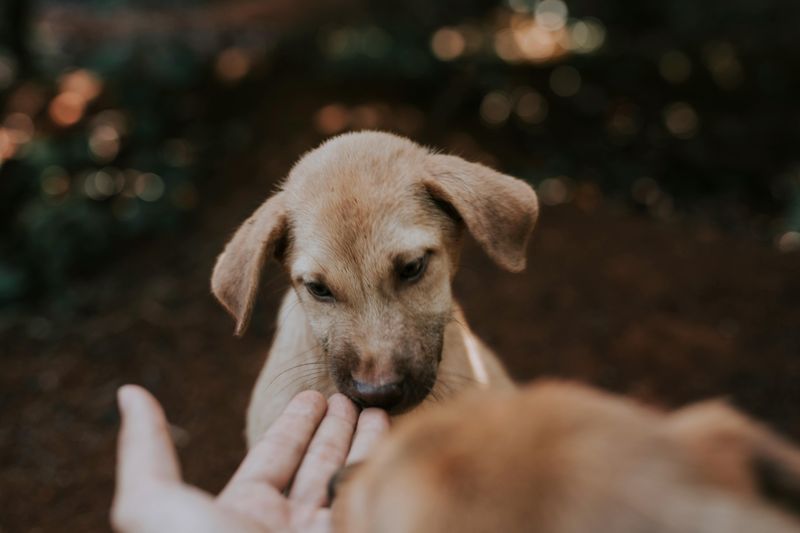
A quick approach, brief sniff, and calm withdrawal can seem aloof, but it’s actually classy canine etiquette. Your dog is collecting data, then choosing a peaceful distance—no stress, no clinginess. This reaction toward your friend signals neutrality leaning positive: “I’m fine; proceed respectfully.” If the body stays loose and the tail sits at mid-level, you’re seeing mature social control. Praise your friend for not pushing contact. Over time, this greeting often evolves into closer interactions. It’s the canine equivalent of a cordial handshake, and it means your friend cleared the baseline trust bar.
Happy Play Bow
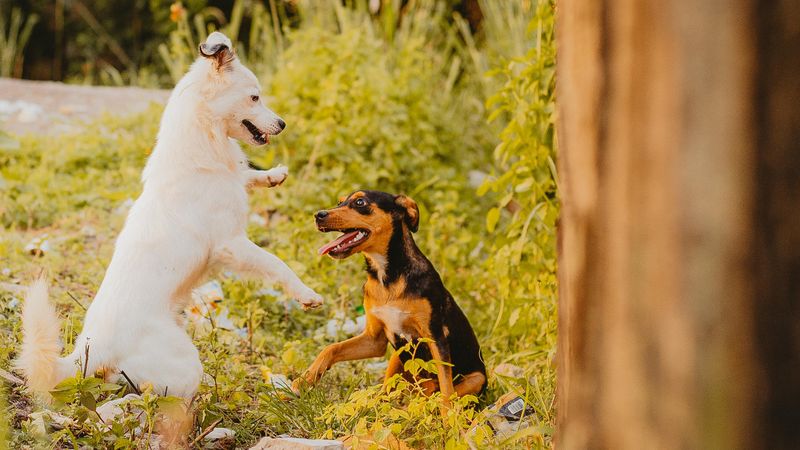
Front legs stretched, rump high, goofy grin—your dog just issued a joyful invitation. The play bow is the ultimate goodwill banner, announcing, “Let’s have fun!” When it’s directed at your friend, you’re seeing true social enthusiasm. Look for bouncy hops, loose tail sweeps, and exaggerated movements that say the play is safe and friendly. If your friend mirrors with low energy and soft voice, the connection deepens. Bonus points for a toy drop at their feet. This isn’t just friendliness; it’s your dog actively recruiting your friend into their trusted circle of fun.
Leaning In for Support
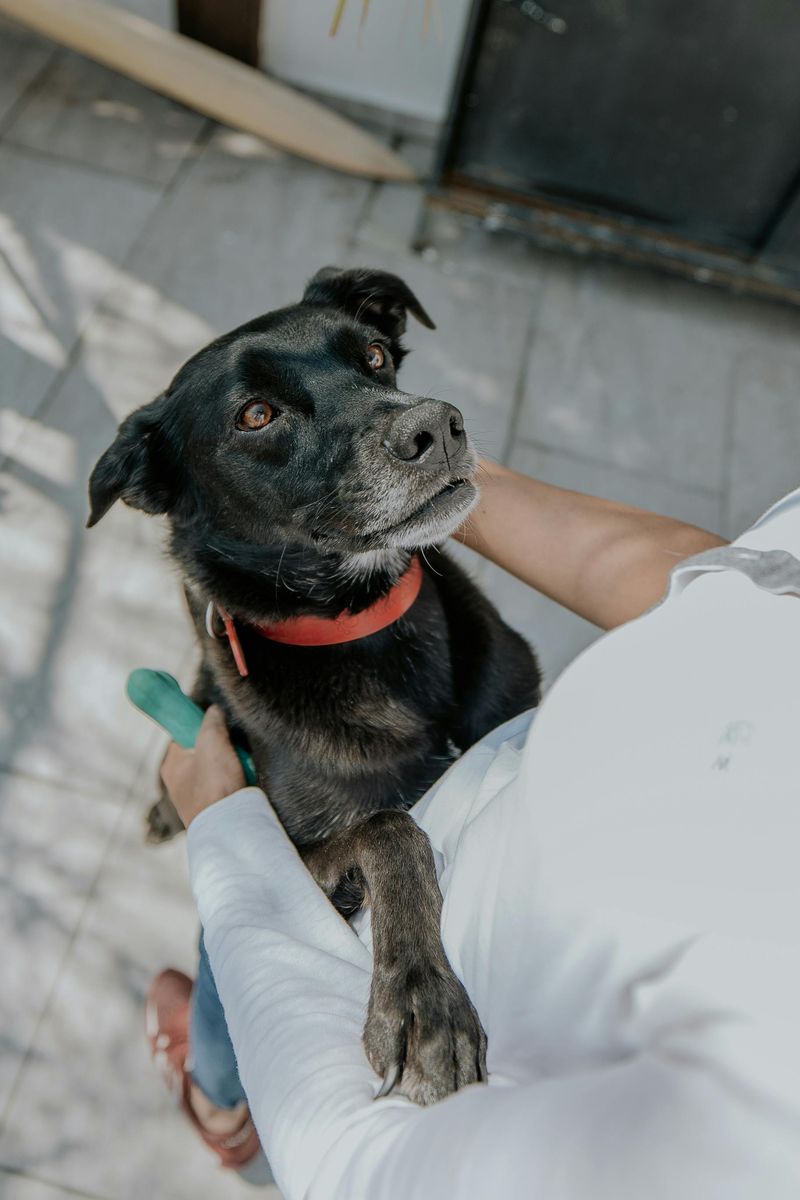
When your dog leans gently into your friend’s leg, it’s a calm social statement: “I like you—and I might want reassurance.” The lean blends affection with trust, especially if paired with a relaxed tail and quiet sigh. Dogs seeking light pressure often feel comforted, choosing proximity over excitement. If your friend stays still and offers calm strokes on the shoulder or chest, the bond solidifies. Watch for looseness in the hips and soft ears to confirm comfort. This isn’t clinginess; it’s a confident connection move that shows your friend is becoming a safe person.
Subtle Whale Eye Warning
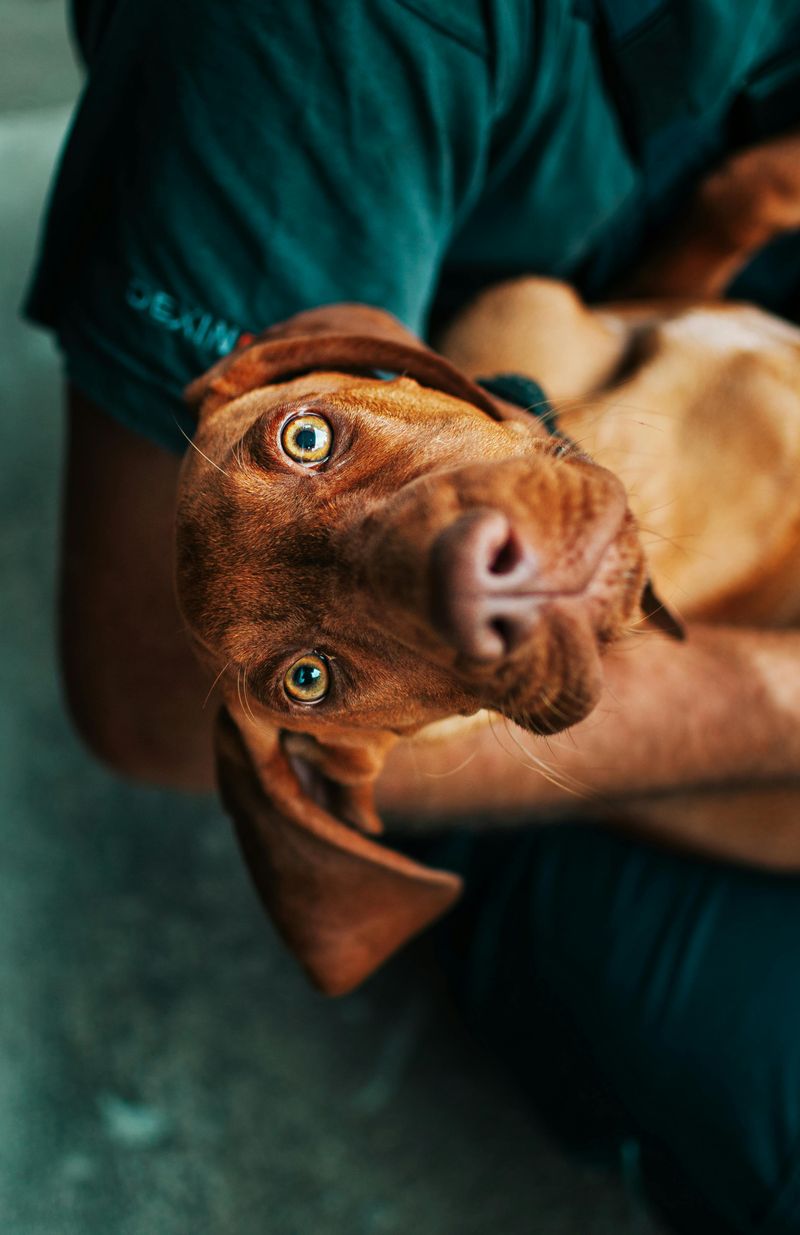
Seeing the whites of your dog’s eyes while they avert their head is a caution sign. Whale eye often signals discomfort or stress—a cue that your friend is too close, too fast, or too loud. If it pairs with lip licking, yawning, or a stiff body, step in to create space. Ask your friend to turn sideways, crouch softly, and avoid direct reaching. Respectful distance can quickly defuse tension. This is not aggression; it’s a plea for boundaries. Heed it early, and your dog will learn your friends listen, turning wary encounters into neutral—even positive—ones.
Paw Lift Pause
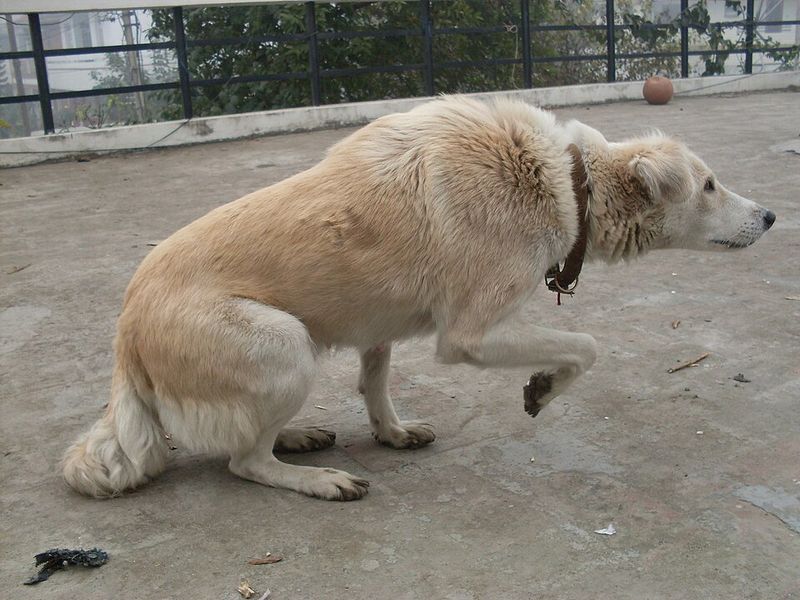
A lifted front paw can mean curiosity edged with uncertainty. It’s your dog’s “I’m thinking about this” moment. If they freeze slightly, sniff, and raise a paw toward your friend, they’re processing. Combine observations: relaxed tail and soft ears suggest cautious interest, while stiffness indicates worry. Invite your friend to slow down, offer a side profile, and let the dog close the gap. Add gentle praise for exploring at their pace. When respected, this pause often flips into friendly engagement. The paw lift is a thoughtful check-in—handle it well, and trust takes a step forward.
Air Sniffing and Scent Drift
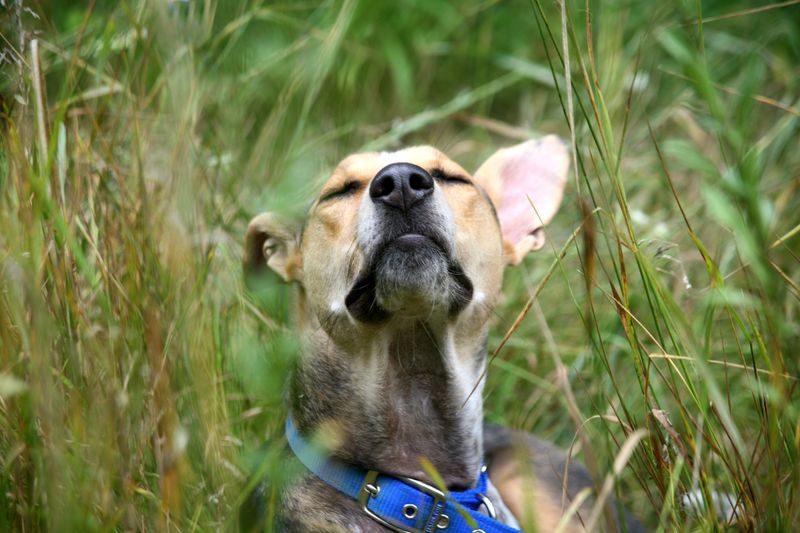
When your dog raises their nose and samples the air near your friend, they’re running a social background check. Air sniffing without approaching suggests curiosity with cautious boundaries. If followed by a slow approach and relaxed posture, they’re warming up from afar. Your friend can help by avoiding perfume-heavy scents and standing still, letting odor cues travel. A gentle verbal greeting can reassure without pressure. Once the scent profile feels safe, many dogs step closer with confidence. This reaction says, “I’m interested—prove you’re safe,” and respectful patience typically earns a positive verdict.
Toy Presentation Ceremony
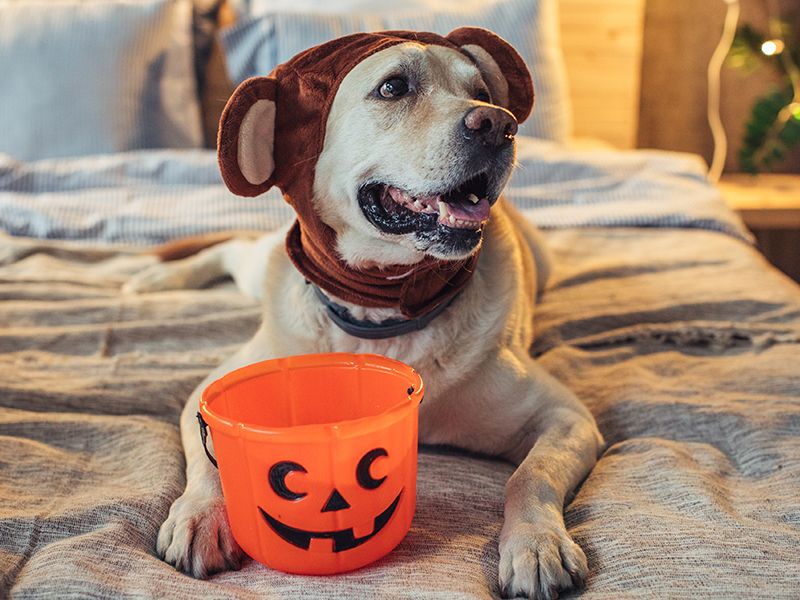
When a dog trots up with a favorite toy and plants it at your friend’s feet, consider it a VIP invitation. This behavior blends sharing, engagement, and social trust. Look for a loose mouth, wiggly hips, and bright eyes. Some dogs parade the toy without releasing it—still a strong sign of enthusiasm. Encourage your friend to avoid snatching; instead, coax a gentle trade or playful tug if appropriate. Respecting the ritual cements the bond. A toy offering isn’t just play—it’s a friendship contract, and your dog is proposing terms with joyful confidence.
The Side-Sit Shadow
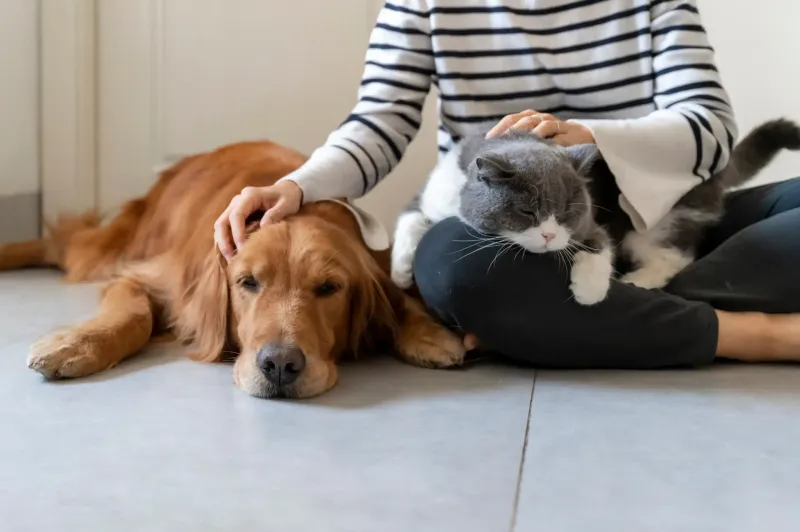
When your dog chooses to sit beside your friend—hip-to-knee, not on top—they’re expressing quiet loyalty. Side-sitting signals comfort without clinginess, often after initial introductions settle. Look for steady breathing, soft ears, and a neutral tail resting on the floor. Your friend should reward with calm strokes on the chest or side, avoiding overhead pats. This measured closeness shows your dog values proximity and feels safe. It’s the canine equivalent of choosing someone’s company during downtime. If your dog naps in this position, congratulations—your friend just won a long-term seat on the trust bench.
Yawns, Licks, and Shake-Offs
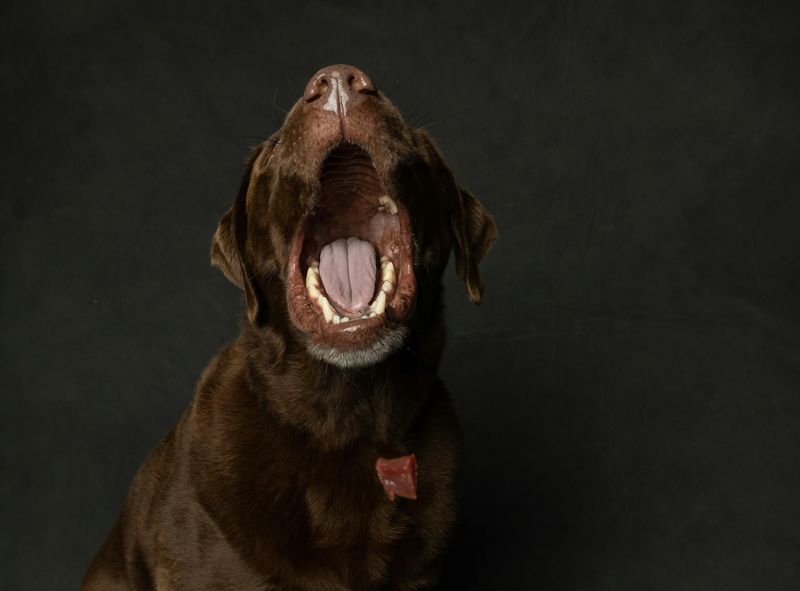
Stress-release signals can look polite but speak volumes. A yawn, quick tongue flick, or full-body shake-off after greeting indicates social tension being managed. If your friend backs off slightly and softens their movements, those stress signs usually fade. Pairing these with curved approaches and low voices helps. These aren’t rudeness; they’re coping strategies. Notice frequency: occasional is normal, repeated means discomfort. Teach your friends to pause, give space, and let the dog re-initiate. When respected, stress signals convert into relaxed behavior, proving your friend understands dog language—and earns trust faster.
Hard Stare and Freeze
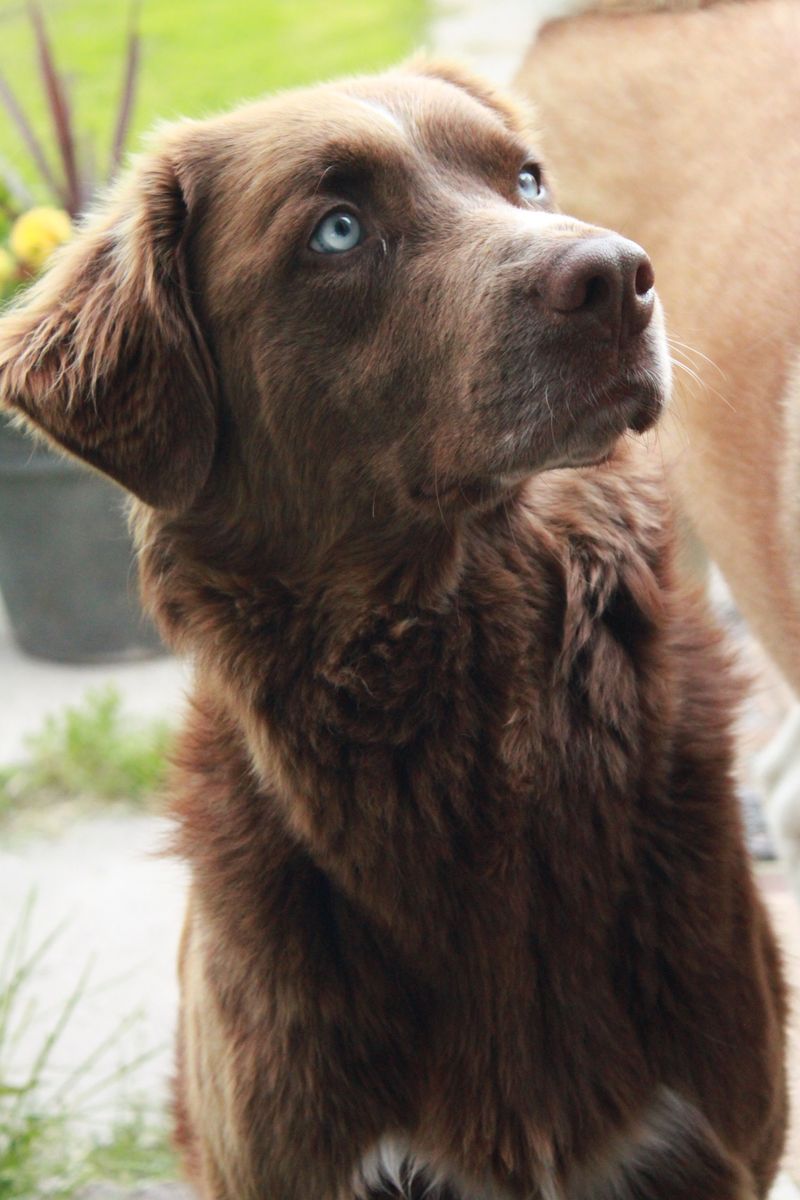
A still body, closed mouth, and unblinking stare are red-alert cues. Your dog is deeply uncomfortable and considering defensive options. Immediately create distance, avoid eye contact, and redirect gently with treats or a leash break. Ask your friend to turn sideways, lower intensity, and stop reaching. This isn’t a time for coaxing; it’s a time for de-escalation. Once the freeze melts—look for blinking and a head turn—you can restart introductions more slowly. Respecting this signal keeps everyone safe and shows your dog you’ll advocate for them, transforming future meetups into calmer experiences.