
You know that moment when your dog looks thrilled, but something in your gut says this is not just happy energy? Overstimulation can masquerade as excitement, and if you miss the signs, things can spiral fast.
Learning to spot subtle shifts helps you intervene early, keep everyone safe, and build calmer habits. Let’s decode the behaviors that deserve a closer look so you can support your dog with confidence.
Jumping that escalates instead of stopping
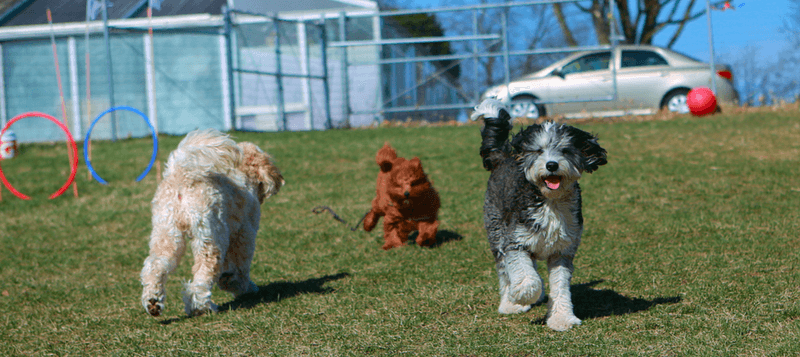
Jumping can look friendly, but when it keeps escalating, your dog is likely over threshold. You might notice paws hitting higher on your chest, claws digging in, and a tail that goes from waggy to rigid.
Breath quickens, pupils widen, and your shirt becomes a climbing wall.
Pause the interaction before it peaks. Turn your body sideways, plant your feet, and calmly reset the environment.
Toss a scatter of treats on the floor to lower arousal and shift focus down.
After the reset, try a structured greeting with sit, hand target, or go to mat. Reinforce four paws on the floor every time.
If jumping reappears immediately, increase distance and give your dog a decompression break.
Mouthing hands or sleeves during greeting
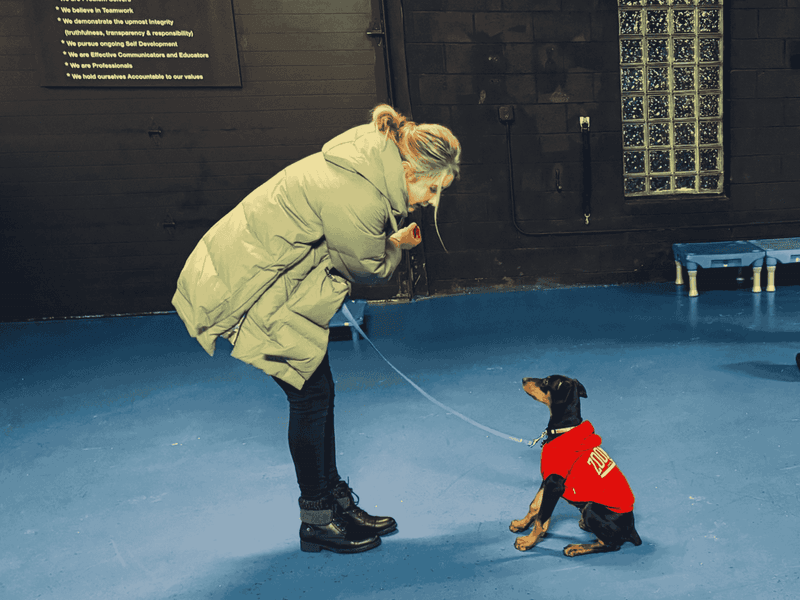
Mouthing during greetings often starts soft, then gets grabby as arousal spikes. You feel tugging at your sleeve, quick nibbles on fingers, and see whiskers forward with tight lip corners.
It is not aggression, but it is not calm either.
Interrupt early with a neutral pause. Guide a treat scatter or ask for a hand target so the mouth has a job.
Keep greetings short, quiet, and with space.
Provide a greeting toy to occupy the mouth. Reinforce gentle contact and release pressure by backing up if intensity climbs.
If mouthing returns instantly, end the session and try again after a brief sniffy walk or rest.
Nipping when petted
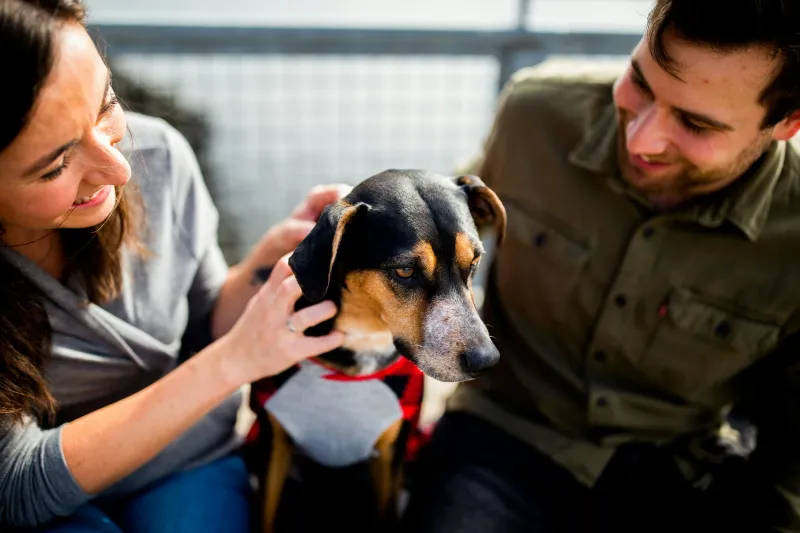
Nipping mid-pet is a flashing neon sign that excitement tipped into discomfort. The dog accepts strokes, then suddenly snaps toward the hand, mouth tight, ears back, and eyes hard.
You might also notice stillness before the nip.
Stop petting the second tension shows. Shift to consent-based touch: offer a hand, pet for two seconds, pause, and wait for re-engagement.
Keep sessions brief and predictable.
Lower overall arousal with sniffing games and decompression walks. Teach chin rest or stationing on a mat for structured interaction.
If the behavior escalates or generalizes, consult a certified trainer or behavior professional for a tailored plan.
Zoomies that crash into furniture
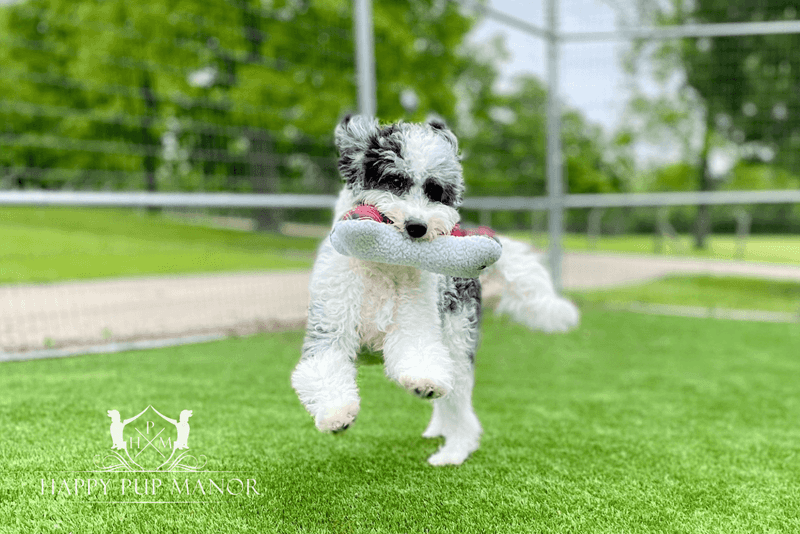
Zoomies can be joyful, but repeated collisions tell a different story. When your dog pinballs off furniture, ignores your voice, and shows wild eyes with tight lips, arousal is too high.
That chaos risks injury for everyone.
Interrupt safely by opening space to a fenced yard or hallway with fewer obstacles. Scatter food or toss a sniffable mat to redirect energy downward.
Avoid chasing, which fuels the frenzy.
After the storm, offer a chew or lick mat to help parasympathetic recovery. Later, meet exercise needs with structured play and decompression walks.
If crashy zoomies happen daily, adjust routine to include predictable rest, earlier potty breaks, and mental enrichment.
Spinning in tight circles
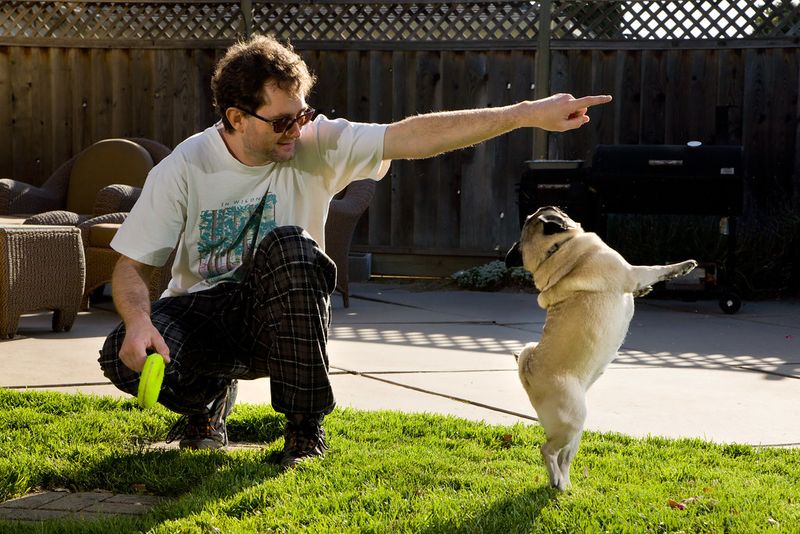
Tight spinning looks playful, yet often signals rising stress or frustration. You may hear nails click as your dog whips around the same spot, tail high, eyes hard, and breathing fast.
The loop can become self-reinforcing.
Gently interrupt by guiding to a mat and cueing nose to hand target, then reward calm stillness. Keep movements slow and voice low.
Provide an outlet like a snuffle mat or slow-food puzzle.
Track triggers: doorbells, leashes, or crowded spaces. Reduce intensity by increasing distance and introducing predictable routines.
If spinning persists or includes tail-chasing with self-injury, contact a veterinarian and behavior professional to rule out pain and develop a comprehensive plan.
Barking that ramps up as people get closer
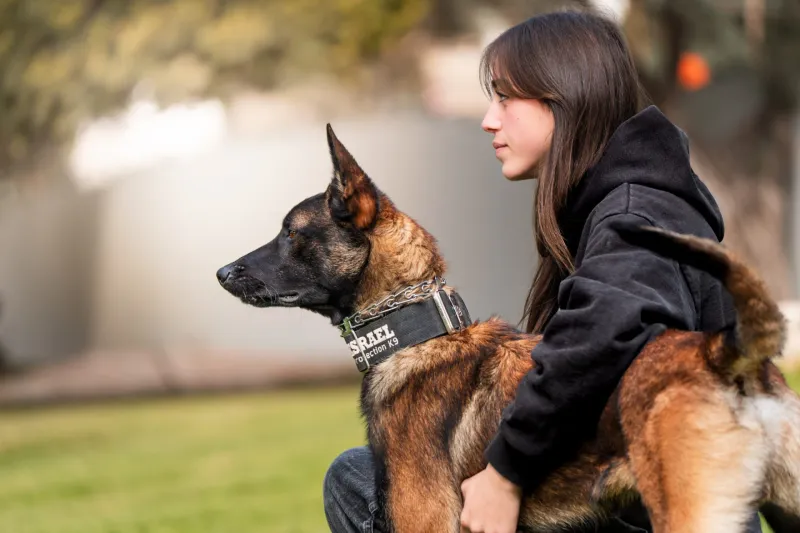
Volume is only part of the message. When barking intensifies with proximity, that is arousal mixed with uncertainty.
You will see forward weight, tight mouth, and a stare that locks on the approaching person.
Create distance first. Step aside behind a parked car or hedge, feed steady treats while the person passes, and speak calmly.
Pair the sight with predictable food to change the association.
Practice Look At That at sub-threshold distances. Keep sessions short and end on success.
If your dog surges despite distance, increase space sooner or switch environments entirely to prevent rehearsal of the escalating bark.
Leash biting during frustration
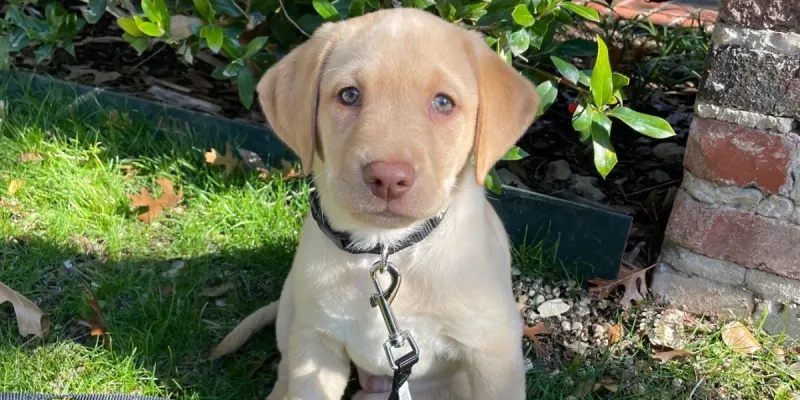
Leash biting often appears when movement is blocked or triggers are near. Your dog grabs, chews, and thrashes the leash, pupils wide and body taut.
It is a pressure release, not defiance.
Switch to a chew-safe backup tab while you drop the primary leash briefly to remove tension, then cue an easy hand target. Feed rapidly for orienting to you.
Increase distance from triggers without yanking.
Use equipment that reduces pressure points, like a well-fit Y-harness. Install alternative behaviors: sniff cue, scatter cue, or treat magnet.
If it is chronic, build decompression into the day and practice patterned walking games in low-distraction areas.
Humping during play or greetings
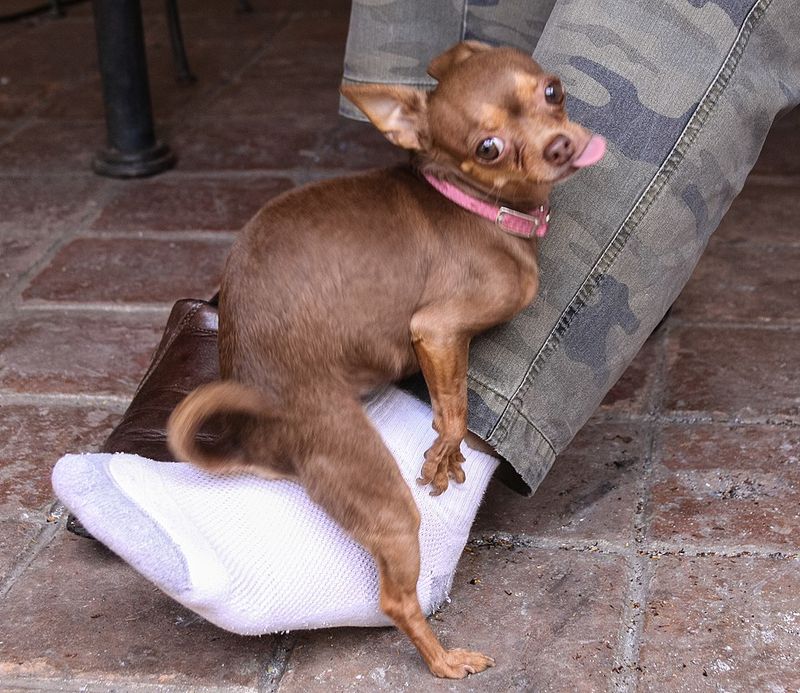
Humping is not always sexual. In high arousal, it can be a coping behavior.
You will notice stiff posture, shallow panting, and a laser focus on the target, often after frantic play or during excitable greetings.
Interrupt quickly and neutrally. Call away, clip the leash, and give a decompression walk around the perimeter.
Reinforce reorientation to you with calm food delivery, not hype.
Prevent rehearsal by rotating play partners, inserting frequent breaks, and practicing sniff breaks. Teach an incompatible behavior like find it or go to mat.
If the behavior persists across contexts, look at overall load: sleep, pain, and the intensity of daily activities.
Pacing that doesn’t settle
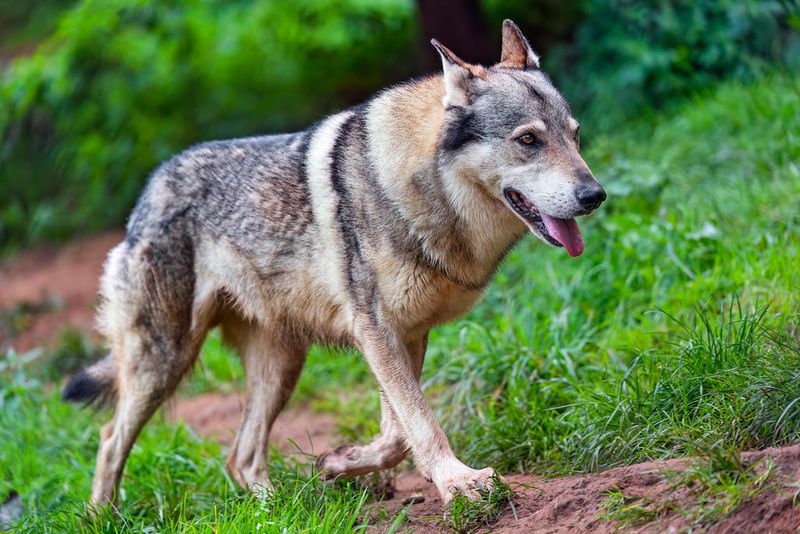
Endless pacing signals a nervous system that cannot downshift. Your dog moves the same route, checks doors, and sighs without lying down.
Facial muscles look tight and blinks are sparse.
First, meet basic needs: potty, water, and a quiet space. Then dim lights, reduce noise, and offer a chew or lick mat to encourage settling.
Avoid adding play that spikes arousal.
Teach a relaxed mat routine using slow reinforcement and long exhale breathing on your part. Consider a short decompression walk with sniffing.
If pacing continues beyond context or appears with night restlessness, consult your vet to rule out pain or medical contributors.
Whining that turns into barking

Whining is often the first flare of rising arousal. When it snowballs into sharp barking, your dog is over threshold.
You will see forward-leaning posture, tight jaw, and rapid shifts between window and door.
Cut off the rehearsal loop. Block line of sight, add a white noise buffer, and guide your dog to a station with a chew.
Reinforce quiet with steady, low-energy rewards.
Practice look at that at very low intensity first. Build duration for quiet observing, then disengaging.
If escalation happens quickly, increase distance from triggers and add more decompression in the daily schedule.
Ignoring cues the moment a trigger appears

When a trigger enters, it can feel like your dog forgets their name. Really, perception narrows and hearing filters out.
You will see a hard stare, forward weight, and missed cues that were solid at home.
Do not repeat commands louder. Create distance, step behind a visual barrier, and switch to high-frequency reinforcement for orienting to you.
Use a treat magnet to move calmly away.
Train engagement games under threshold: name response, hand target, and pattern games like 1-2-3 treat. Gradually decrease distance over sessions.
If cues vanish instantly, your setup is too hard, so slide the difficulty back.
Dilated pupils with a fixed stare
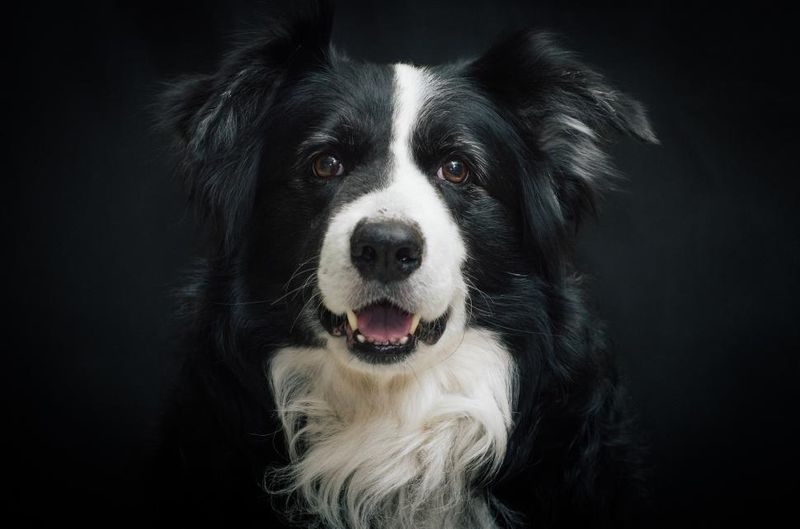
Eyes tell the truth. Dilated pupils with a fixed stare mean arousal is high and decision-making is shrinking.
Pair that with stillness and you have a prelude to explosive movement or vocalization.
Break the moment early. Create space, soften your body language, and feed a calm treat stream for any head turn away.
Avoid reaching over the head or rapid petting.
Track what preceded the stare to adjust future setups. Use pattern games that build predictable, safe choices.
If pupil dilation appears indoors without clear triggers, schedule a veterinary check to rule out pain, medication effects, or neurological concerns.
Hard panting with tense facial muscles
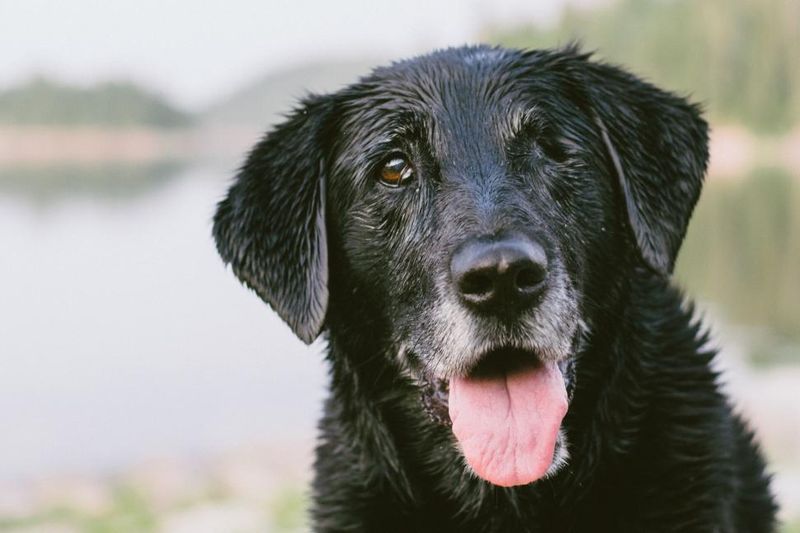
Panting is normal after play, but hard panting with tight lips and forehead creases screams arousal or stress. The tongue may pancake wide, breaths stay fast, and the body holds tension instead of softening.
Move to a quiet, cool space. Offer water, reduce handling, and provide a chew to encourage slower breathing.
Avoid exciting games until respiration normalizes.
Note context: heat, pain, or anxiety. Track recovery time; long recoveries suggest overload.
Build in rest windows, lower-intensity exercise, and slow sniff walks to reduce the daily arousal bucket.
Grabbing objects and running off repeatedly
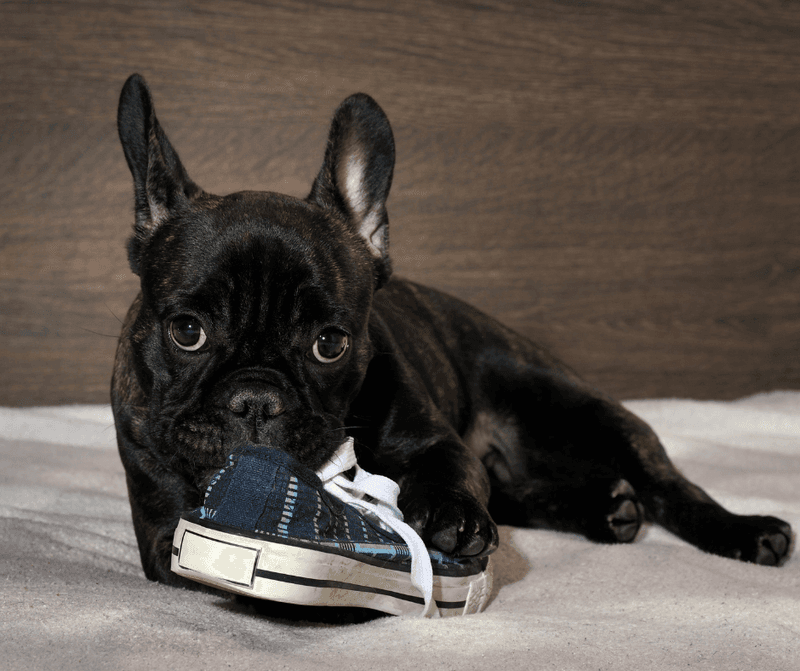
Steal-and-dash can look cheeky, but repetition points to unmet needs and arousal overflow. Your dog grabs socks, remotes, or napkins, then sprints away with pupils wide and tail high.
Chasing cements the game.
Stop the chase. Trade calmly with high-value food, then scatter a few pieces to end the cycle.
Provide legal grab options like tug toys and flirt pole play with clear start-stop rules.
Preempt by managing laundry and counters. Build daily fulfillment with sniffing, training games, and enrichment.
Reward check-ins and toy returns generously so your dog chooses you over the thrill of theft.