
Some dogs love a good romp, but unfiltered energy can turn fun into chaos fast. If you have a powerful or high-drive breed, your rules matter more than any toy in the bin.
With smart boundaries, you can channel intensity into safe, satisfying play. Let’s make roughhousing fun again, without the bruises or bad habits.
American Pit Bull Terrier
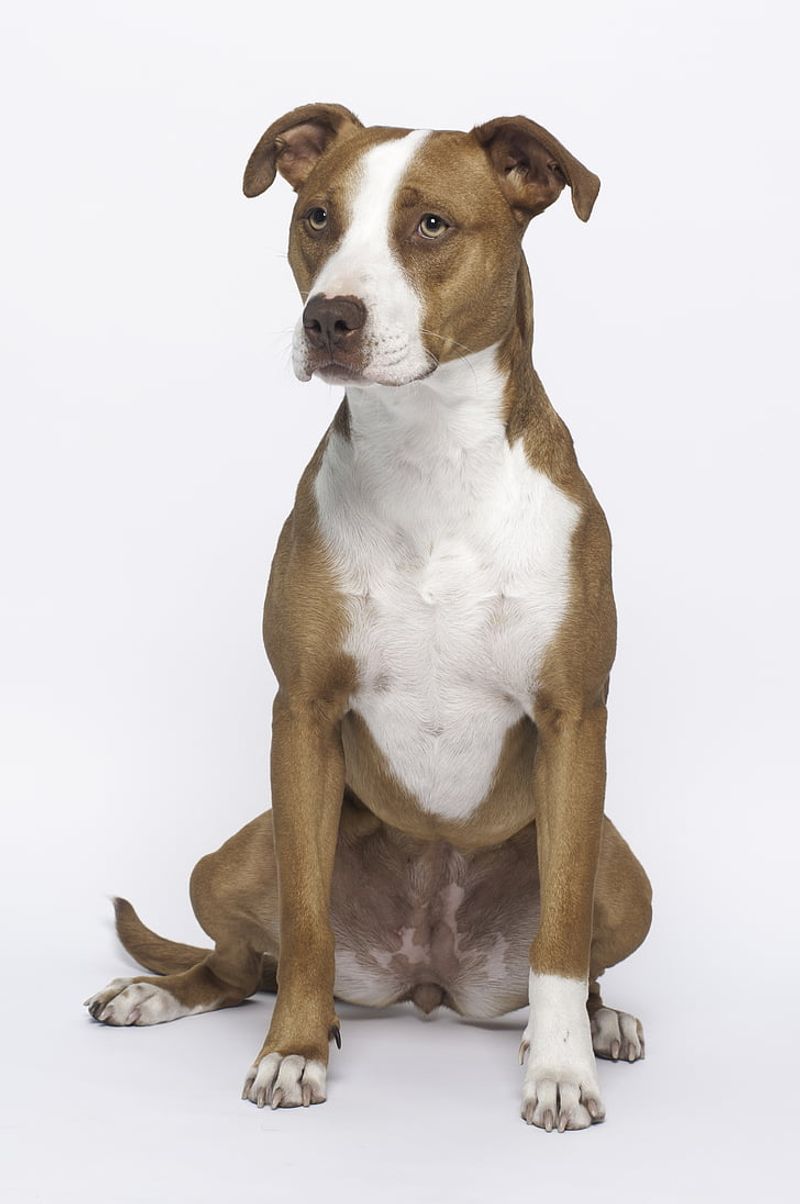
Powerful, athletic, and people focused, the American Pit Bull Terrier thrives on energetic games. Without structure, that enthusiasm can tip into bulldozer body slams, mouthing, and wrestling that overwhelms guests or kids.
You set the rules by teaching calm starts, toy targeting, and release cues before any tug or chase begins.
Short, focused play bursts prevent arousal from boiling over. Swap toys using two identical tugs, reward drop cues, and practice place-mat resets so excitement cycles down fast.
Socialize widely, reinforce soft mouths, and give daily outlets like flirt pole sessions and scent games, and you will keep that big heart fun, not chaotic. Schedule decompression walks and quiet chews after play to seal the lesson.
Consistency makes progress stick.
American Staffordshire Terrier
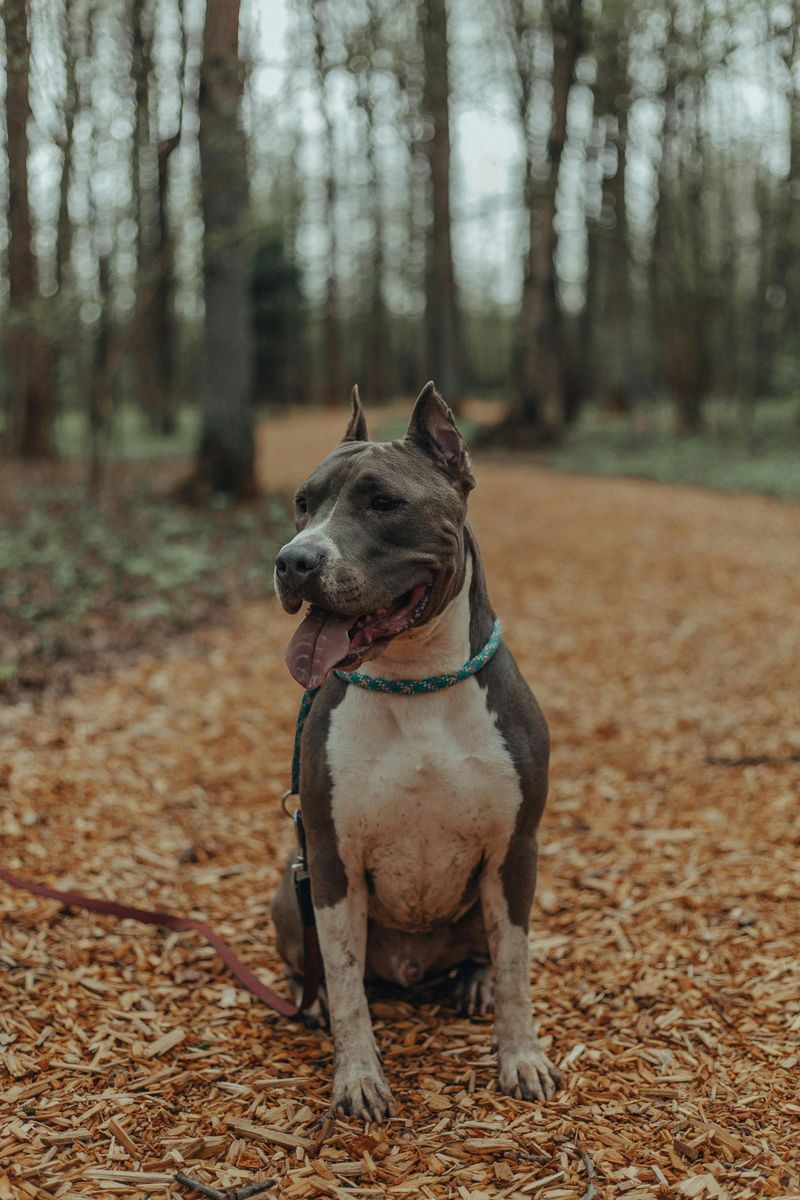
The American Staffordshire Terrier brings enthusiasm, bouncy muscles, and a love of contact that can snowball without guidance. Rough play can escalate into full-body checks and relentless tugging if arousal spikes.
Start with clear yes-no markers, require a sit before every game, and keep leashes on for quick resets during learning.
Rotate toys, emphasize fetch over wrestling, and reinforce soft mouth skills with frequent trades. Use short sessions, then park the game while everyone still feels successful.
Pattern calm by pairing place training with supervised play windows, so your dog learns to flip between on and off. Daily brain work and scent games soak up mental steam.
Protect joints and manners, and this charmer becomes the life of playtime.
Staffordshire Bull Terrier
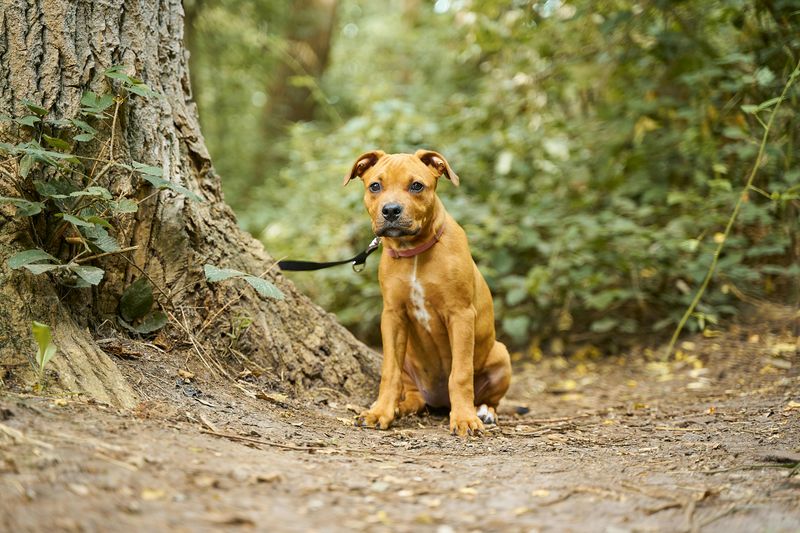
Staffordshire Bull Terriers are cheerful bruisers with rocket-fueled joy. That compact frame can hit like a bowling ball when excitement peaks.
Set boundaries early by cueing gentle greetings, enforcing toy rules, and interrupting zoomies with hand-targets or a quick scatter of treats to reset.
Keep play brief, add rest breaks, and mix tug with obedience games so arousal never snowballs. Practice drop, out, and take cues daily using two-toy swaps, then reward with quick relaunches.
Teach fetch to channel grabby instincts into structured returns. Socialize to varied people and dogs, rewarding calm curiosity.
Provide puzzle feeders and sniff walks to soften edges. With clear rules and outlets, that famous Staffy smile powers joy instead of collisions.
Bull Terrier
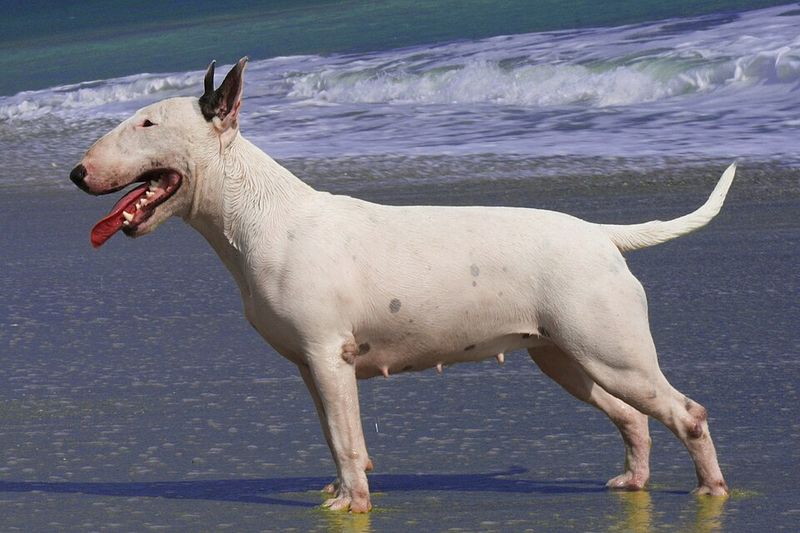
Bull Terriers are comedic powerhouses that turn on like a switch. Once amped, they rebound off furniture, people, and walls if you do not give structure.
Start every game with a stillness ritual, then release to play only when eyes are soft and the body is loose.
Chase and tug are fine when managed with sturdy toys, frequent trades, and time-outs before intensity spikes. Use long lines to prevent ricochet sprints into guests.
Build impulse control with go-to-mat, hand targets, and quick obedience interludes. Tire the brain with shaping games and scent work to reduce chaotic zoomies.
You will love their humor even more when play stays safe, predictable, and short enough to finish on a win.
Miniature Bull Terrier
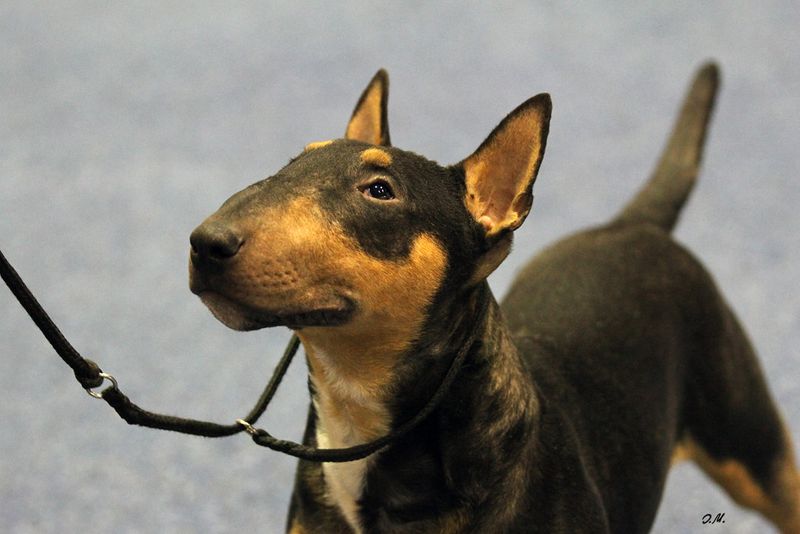
Miniature Bull Terriers pack the same spring-loaded spirit into a smaller frame. Rough play can escalate quickly in tight spaces, so structure is everything.
Begin with leash-on rehearsals, teach take and out, and cap each burst of fun with a settle on a mat.
Rotate soft, durable toys that protect teeth and reward gentle mouths. Use hallway fetch to reduce chaotic angles, and practice impulse control by releasing only from stillness.
Pair play with brief training reps so excitement feeds focus rather than frenzy. Add decompression walks and sniff time daily.
When you give clear green and red lights, your mini clown becomes a polite athlete, not a pinball. Small dog, big rules, great fun.
Boxer
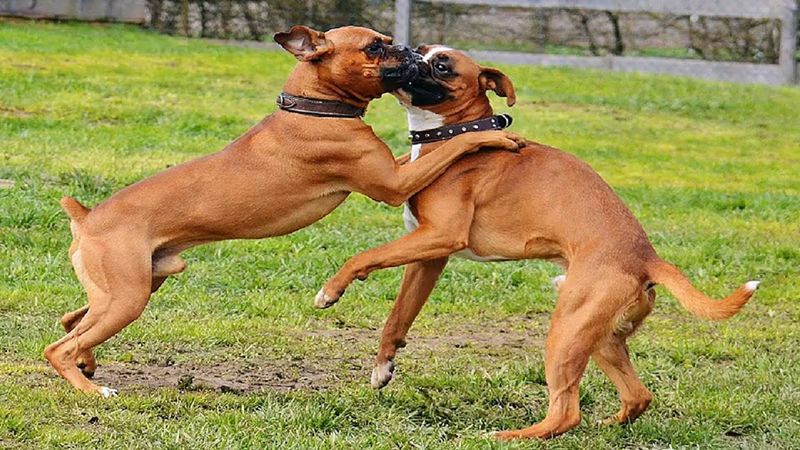
Boxers are exuberant, springy comedians who love body contact. That joy can morph into chest bumps and paw slaps if you do not set limits.
Build rituals: sit to start, take to grab, out to swap, and place to end. Keep sessions short to outrun over-arousal.
Teach polite greetings and four-on-the-floor rules, rewarding with a toy instead of hands. Focus on fetch and flirt pole games with strict release cues and frequent cooldowns.
Practice heeling to field boundaries, then reward with relaunches so control predicts access to fun. Add brain work with scent games and trick training.
A balanced routine keeps your Boxer playful, coordinated, and polite. The bounce stays, the chaos fades, and everyone smiles.
American Bulldog
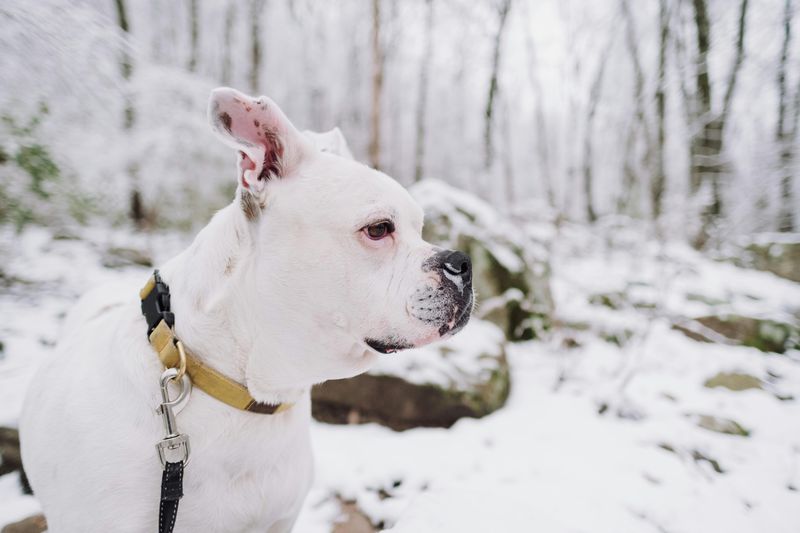
American Bulldogs bring farm-tough strength and surprising speed. Unmanaged, they can bulldoze furniture and people during excited play.
Start with calm leash-on rehearsals and insist on stillness before release. Use durable tug toys, reinforce soft mouths, and interrupt arousal with hand targets or a return to a place bed.
Favor structured fetch over wrestling, and add balanced conditioning like hill walks and controlled sprint recalls. Keep sessions short, end on success, and interleave obedience reps to build habits under excitement.
Socialize to novel surfaces and sounds so surprises do not spike intensity. Daily sniff walks and puzzle feeders smooth edges.
With consistent rules and fair outlets, this powerful partner becomes a gentle playmate who respects space and speed limits.
Cane Corso
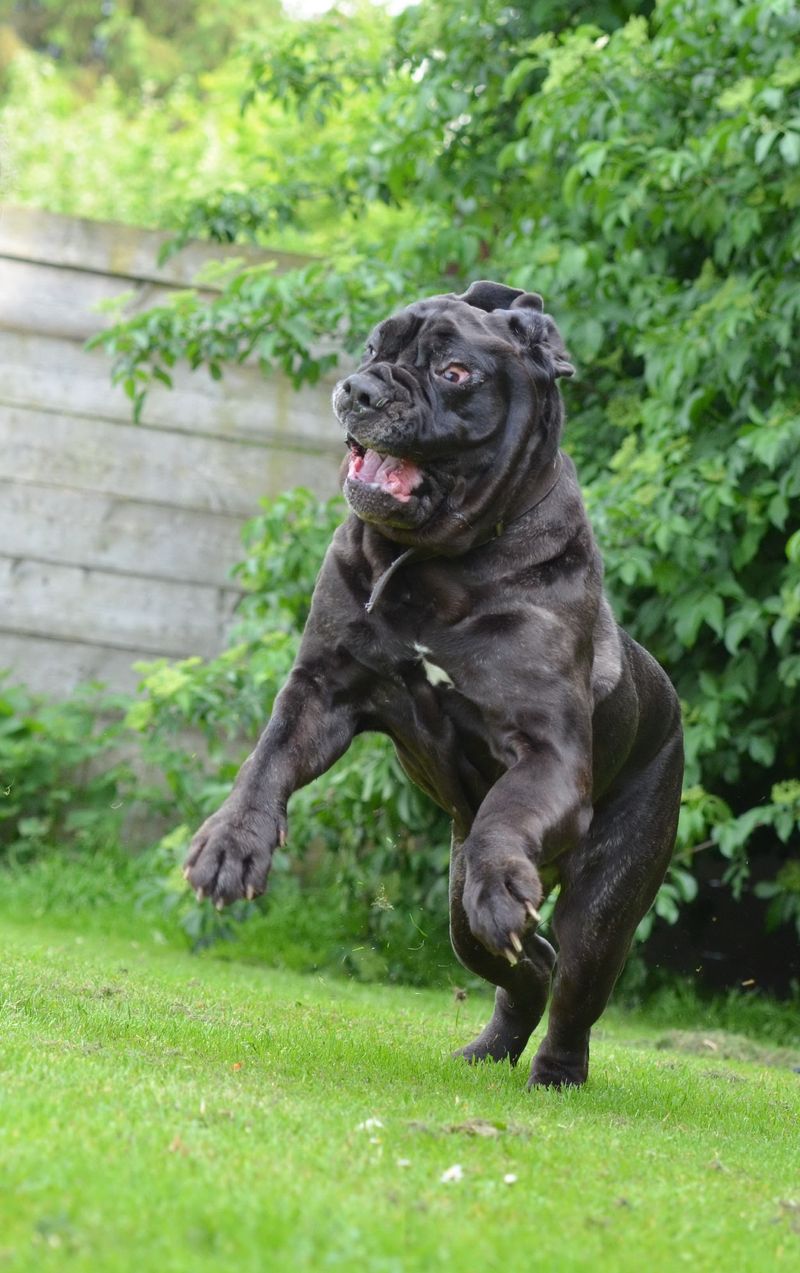
The Cane Corso is imposing, sensitive, and highly responsive to confident leadership. Rough play without rules can turn into body blocking and hard grabs.
Teach calm engagement, eye contact, and a clean release before any game starts. Keep a leash or long line on early to guide choices, not wrestle.
Use structured fetch and tug with strict out cues, then cool down with a relaxed heel or sniff walk. Reward neutrality around distractions so excitement does not spill onto people.
Cap play with a mat settle and chew to teach off switches. Mental work matters as much as exercise.
When you make access to fun depend on manners, your Corso becomes a thoughtful athlete instead of a freight train.
Rottweiler
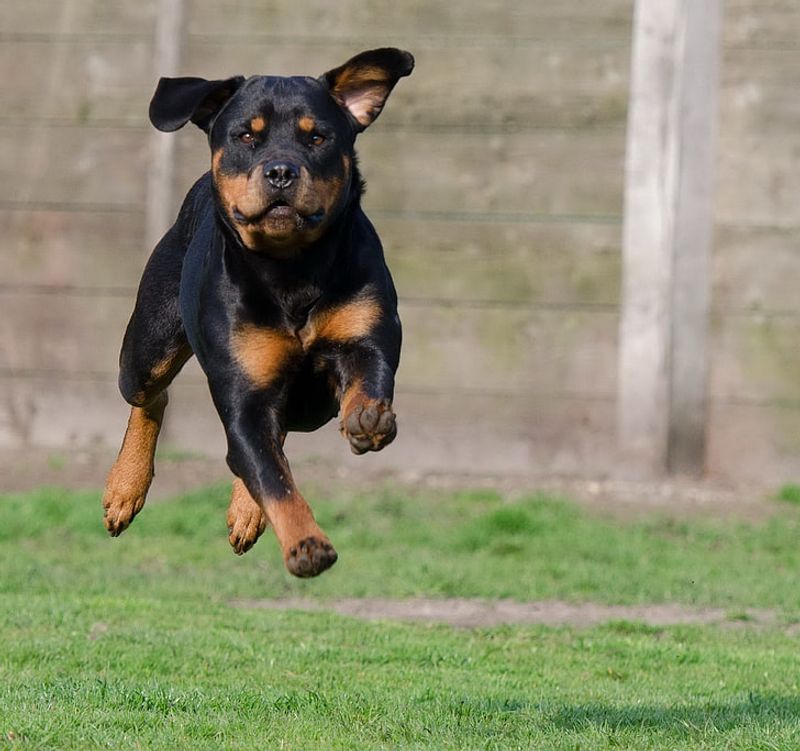
Rottweilers love purposeful work and can hit like a linebacker when excited. Roughhousing can become herding, bumping, or grabbing clothes if you skip structure.
Start with a sit, eye contact, and a release word for every game. Keep a short line attached initially to prevent uninvited tackles.
Choose fetch and tug with firm rules over wrestling. Train out and drop with two toys, and reinforce four-on-the-floor greetings.
Build impulse control using heeling patterns around the yard before relaunching play. Mix in scent games and tracking-lite exercises to satisfy the working brain.
End with a calm down routine and chew. With clear consistency, your Rottie channels power into polite, confident fun that wins fans, not apologies.
Doberman Pinscher
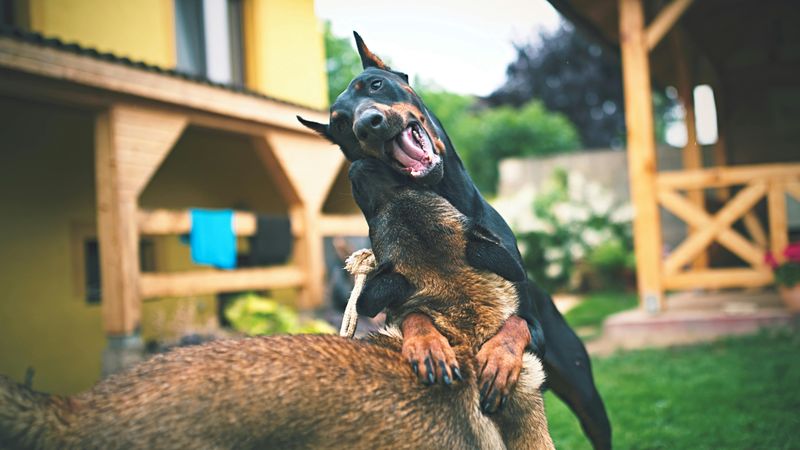
Dobermans are quick thinkers with needle acceleration. In rough play, they can overshoot, body check, or nip clothing when arousal spikes.
Make clarity your superpower. Require a sit, watch, and verbal release before every sprint or tug, and keep sessions short to preserve precision.
Use long lines to shape clean recalls and prevent chaotic arcs. Rotate toys, practice out with trades, and pair play with obedience sprints to keep minds engaged.
Reward neutrality at the door and during handler movement, not pushy jumping. Decompression walks, structured heeling, and scent games ease sharp edges.
When your rules unlock the fun, the Doberman’s polish shines, giving you speed, accuracy, and play that feels athletic, not reckless.
German Shepherd Dog
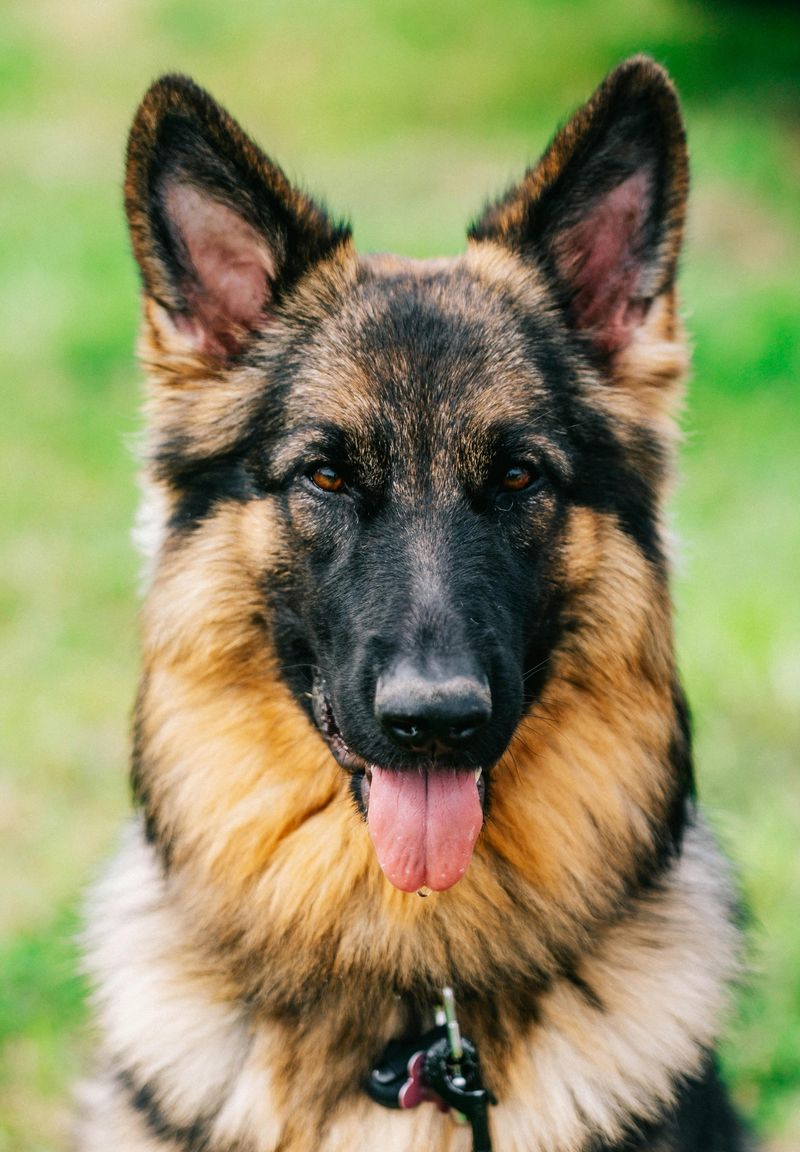
German Shepherd Dogs are intense workers built for drive. Unchecked, that drive becomes frantic spinning, heel nipping, and explosive pouncing during play.
Start by teaching stillness, eye contact, and a clean take cue. Keep lines attached while rehearsing out and re-bite to prevent chaotic grabs.
Favor tug and fetch with clear rules, interleaving obedience like heel, sit, and down to modulate arousal. Use environmental boundaries, then reward with relaunches so control predicts access to toys.
Add tracking-style sniff trails and problem-solving puzzles to satisfy the working brain. End sessions with place and a chew to cement the off switch.
With calm, consistent structure, your GSD’s legendary drive becomes precise, powerful, and safe around family and friends.
Belgian Malinois
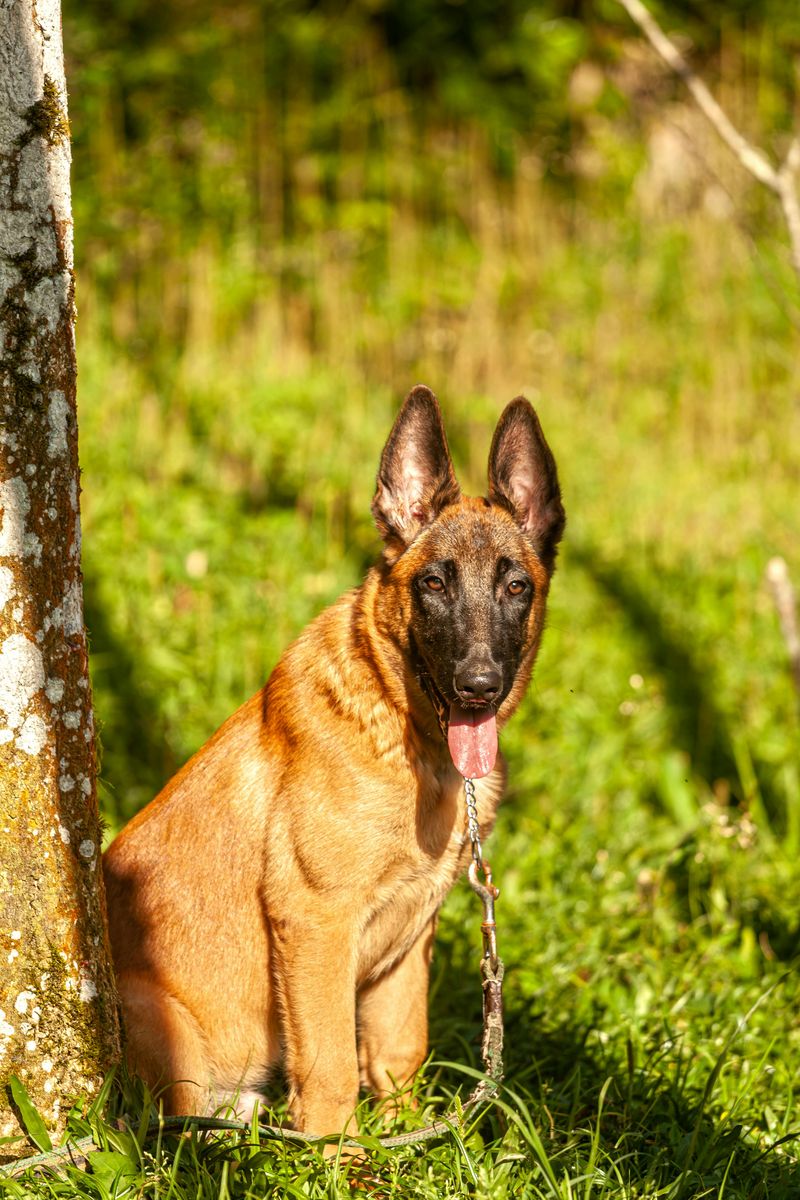
The Belgian Malinois is a Formula One dog. Rough play can ignite frantic leaping, clothes grabbing, and vocal intensity in seconds.
Precision structure is kindness here. Use clear take and out cues, short lines, and frequent resets to maintain clean grips and calm launches.
Keep sessions brief, reward obedience between bites, and end while arousal is still manageable. Provide daily outlets like scent work, trick shaping, and controlled fetch to match the mental engine.
Reinforce neutrality around visitors before any games start. Cap with place and decompression walks so the off switch gets as much practice as the on switch.
When you balance drive and rules, your Malinois becomes thrilling to play with, not overwhelming.
Australian Cattle Dog
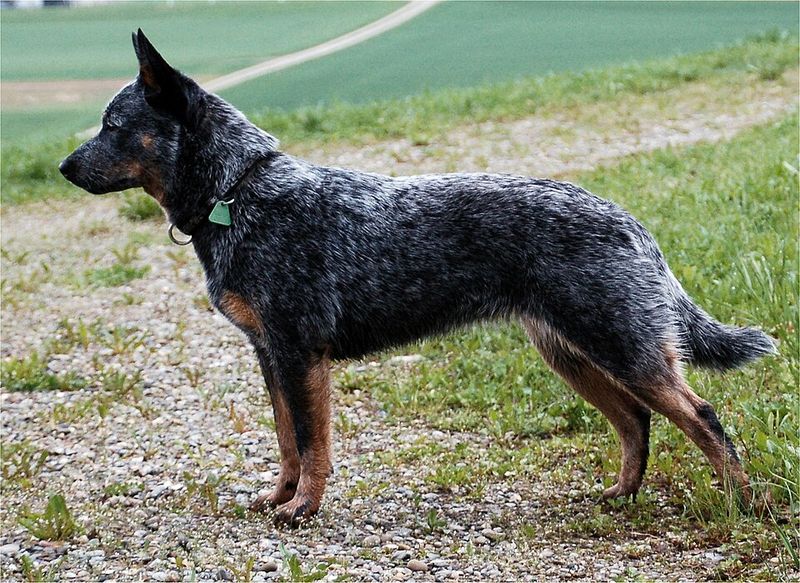
Australian Cattle Dogs are sturdy problem solvers bred to control movement. In excited play, that heritage shows up as heel nips, body blocks, and sharp turns that can topple kids.
Establish rules early: sit to start, drop on cue, and restart only after stillness returns.
Choose long, straight fetch over wrestling to reduce contact. Use a long line to prevent herding arcs around people.
Reward targeting toys, not clothing, and practice impulse control with hand targets and go-to-mat. Add scent games, agility-lite drills, and structured hikes to satisfy the worker within.
Cool down with sniff walks. With thoughtful outlets and consistent boundaries, your heeler’s grit fuels smart, safe play that respects space while keeping that spark alive.
Airedale Terrier
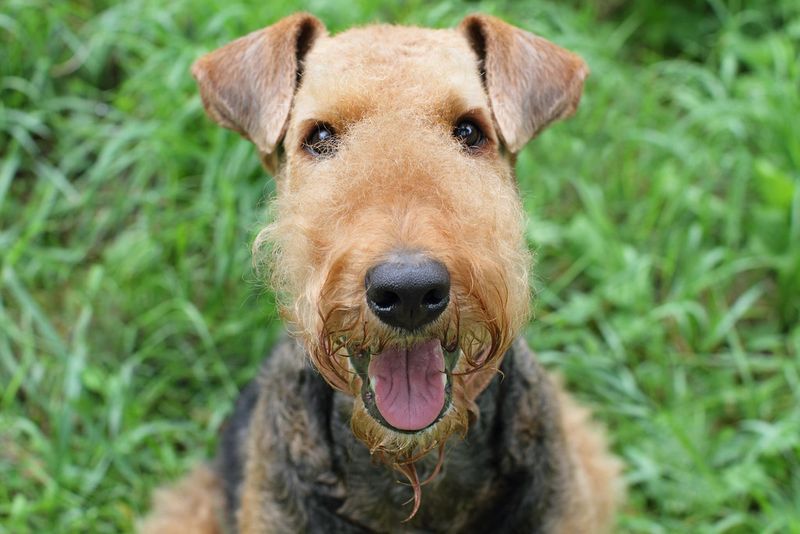
Airedales are bold terriers with clown vibes and stamina. Rough play can slide into grabby mouths and springy pounces if arousal explodes.
Start with calm sit, gentle take, and fast trades. Reward soft grips and brief bursts, then park the toy for a reset before intensity spikes.
Mix in hunt games that reward noses over teeth, like scatter feeds and hidden toy searches. Keep a light line attached early for graceful redirection.
Add obedience sprints and trick shaping to burn brain fuel. End with a mat settle and chew to build the off switch.
When you make manners the ticket to fun, the King of Terriers delivers spirited, courteous play that leaves everyone laughing, not bracing.
Jack Russell Terrier
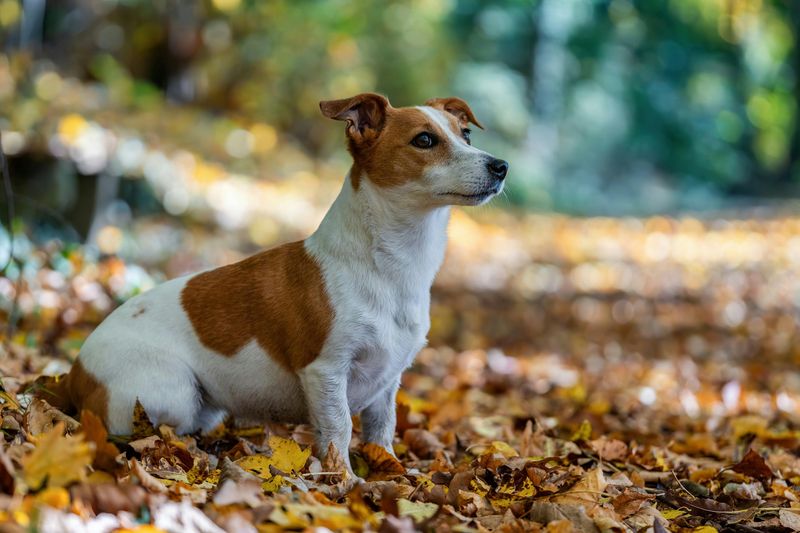
Jack Russells are pocket rockets with turbocharged prey drive. Rough play often becomes ankle nips or sky-high launches at sleeves.
Start with structured flirt pole sessions using take and out cues, then reinforce stillness before every relaunch. Keep a long line on while you build reliable trades.
Short, high-quality bursts beat long marathons. Use food scatters and sniff breaks to downshift arousal.
Teach fetch and tug with clear boundaries, and avoid wrestling with hands or clothing. Add puzzle feeders and trick training to satisfy that busy brain.
Finish with a settle on a mat and a chew. When rules unlock access to motion, your Jack channels fire into small, spectacular, and safe fun.
Dogo Argentino
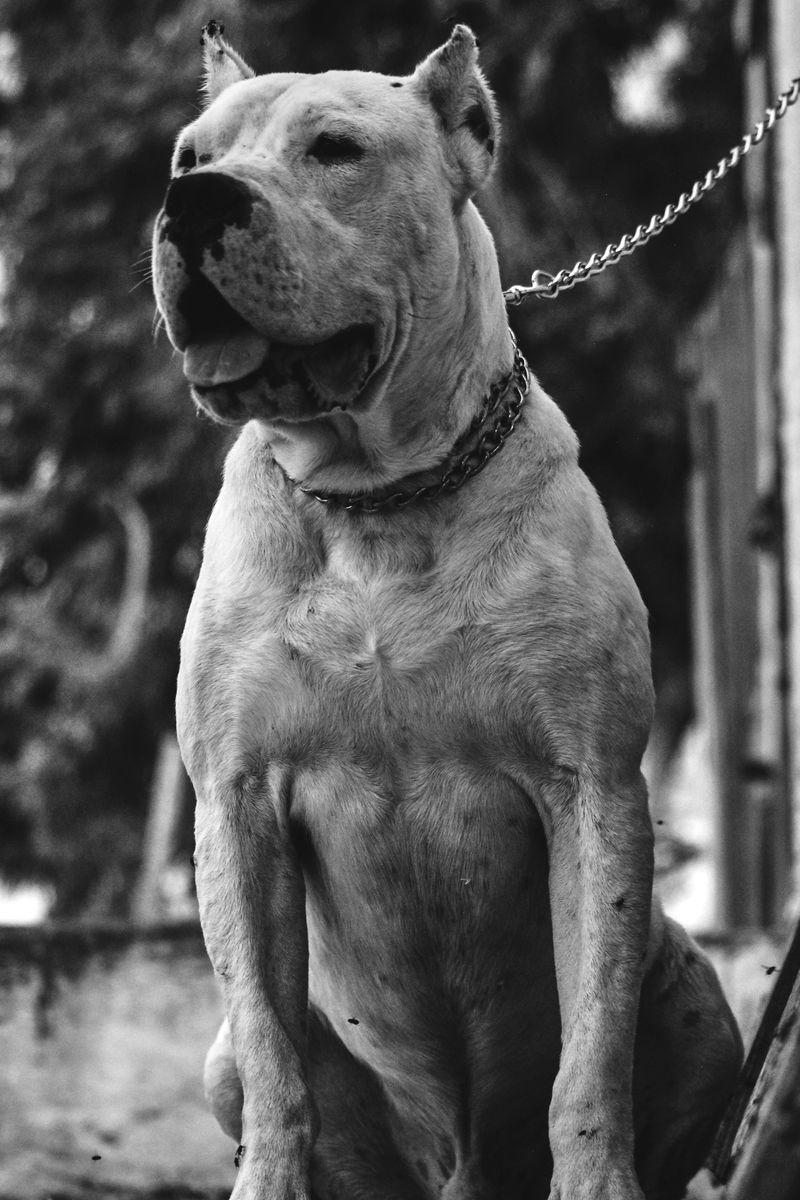
The Dogo Argentino is athletic, determined, and intensely bonded. Rough play without structure can turn into full-contact collisions.
Establish clarity from the start: sit, watch, and take cues, plus a crisp out that always pays. Keep early sessions on a long line for clean starts and stops.
Favor straight-line fetch and controlled tug over wrestling. Pair play with obedience to lower arousal and reward neutrality around people before any game begins.
Provide scent games, tracking-lite, and conditioning walks to meet the workload this dog craves. End every session with place and a calming chew.
With steady boundaries and fair outlets, your Dogo channels power into polite, thrilling play that feels athletic and safe for everyone.